REVIEW · SINTRA
Sintra Walking Tour – The Portuguese Fairytale
Book on Viator →Operated by Hi Lisbon Walking Tours · Bookable on Viator
Sintra turns into a storybook on foot. I love how this route keeps the pace tight for a 2.5-hour outing, and I love the way the guide connects what you see to the ideas behind it—symbols, rulers, and architectural styles that explain the chaos. I did notice one catch: admission tickets aren’t included, so your time and budget should assume a few paid entrances.
The bonus is the variety. You’ll get major stops like Quinta da Regaleira and Pena, plus smaller hits around town that still feel magical—fountains, museums, a classic pastry shop, and old hotel lore. For value, it’s hard to beat: the tour itself is inexpensive, while the paid sights are the add-ons.
You start at Jardim Correnteza at 11:00 am and finish near Valverde Sintra Palácio de Seteais, with a maximum group size of 15. It runs in English, and you’ll get a mobile ticket for the day.
In This Review
- Key things to know before you go
- The real payoff: a short route that explains Sintra
- Start at Jardim Correnteza, end at Seteais
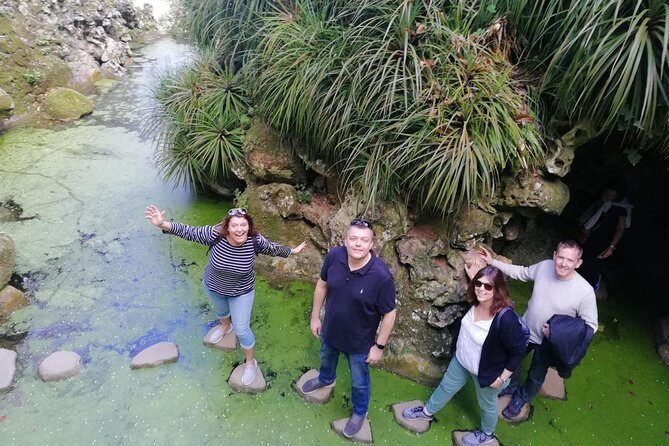
- Quinta da Regaleira: tunnels, gardens, and secret-knight energy
- Sintra National Palace: Moorish origins plus Gothic and Manueline mix
- Castelo dos Mouros: protected by Moors, restored by Fernando II
- National Palace of Pena: the style buffet that became famous
- City Hall, Fonte Mourisca, and Anjos Teixeira: the free stops that add soul
- Casa Piriquita and Igreja de São Martinho: pastries, then faith
- From Lawrence Hotel to Valverde Seteais: ending with a sense of time
- Price and tickets: is $3.60 really worth it?
- Who this tour fits best
- Should you book the Sintra Walking Tour – The Portuguese Fairytale?
- FAQ
- Where does the tour start and end?
- What time does the tour begin?
- How long is the walking tour?
- How much does it cost?
- Is the tour offered in English?
- Are admission tickets included?
- What is the group size?
- Do I receive a mobile ticket?
- What happens if the weather is bad?
- What is the cancellation policy?
- When do I need to cancel to get a refund?
Key things to know before you go

- Quinta da Regaleira’s tunnels and symbolism: Tempting “what am I looking at?” moments get real context.
- Pena Palace’s style mash-up: You’ll see several design influences in one place, explained in plain terms.
- Moors to Fernando II: The route tracks who built, who protected, and who restored Sintra’s power.
- Free stops keep the day moving: City Hall, Fonte Mourisca, Anjos Teixeira, and more add texture without extra entry.
- Small group vibe: Up to 15 people makes it easier to hear the guide and keep momentum.
- Extra tickets for the big palaces: Some entrances require separate admission, so plan for that.
The real payoff: a short route that explains Sintra

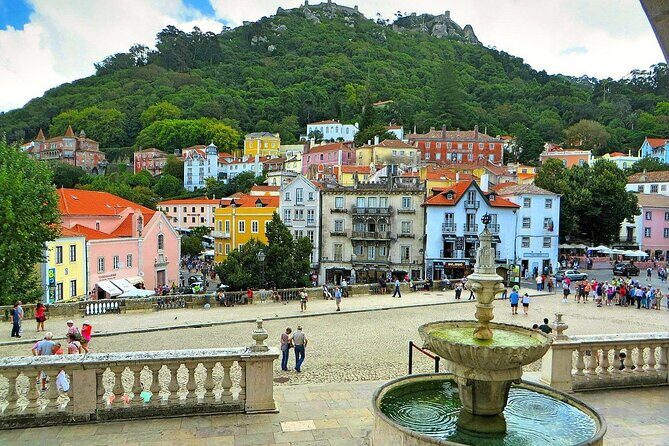
Sintra can feel like a puzzle box. You see a palace here, a castle there, then suddenly you’re lost in Instagram angles and ticket lines. This tour helps you get the pattern fast. In just about 2 hours 30 minutes, you cover the main “fairytale” landmarks without trying to do everything in one day.
I liked that the stops don’t just sit there. The guide ties the sights to the story—especially when it comes to Moors, later Portuguese kings, and the artistic flourishes that show up across different buildings. It turns Sintra from a blur into something you can actually remember.
The trade-off is time. Most palace stops are short (around 10–15 minutes). That’s perfect for orientation, but you won’t get hours to wander every room like you would on an all-day visit.
Other hiking and walking tours in Sintra


Start at Jardim Correnteza, end at Seteais
The meeting point is Alameda Combatentes da Grande Guerra 11, 2710-569 Sintra, near Jardim Correnteza. The tour starts at 11:00 am and ends at Valverde Sintra Palácio de Seteais, R. Barbosa du Bocage 8, 2710-517 Sintra.
Why that matters for your day: you’re not walking a tight loop and doubling back. The end point near Valverde makes it easier to continue exploring Sintra after the tour, or to head toward your next plan without feeling trapped at the first stop.
Also, the small group size (up to 15) helps. With a larger crowd, short palace visits can feel rushed. Here, you’ll likely have more breathing room to hear the guide’s explanations before you move on.
Quinta da Regaleira: tunnels, gardens, and secret-knight energy
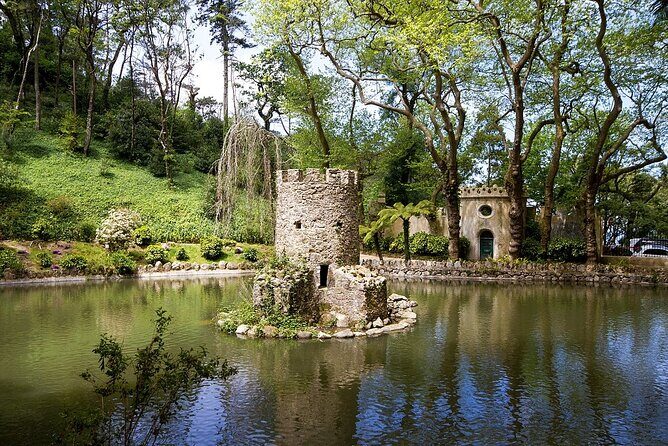
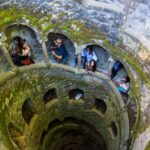
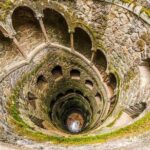
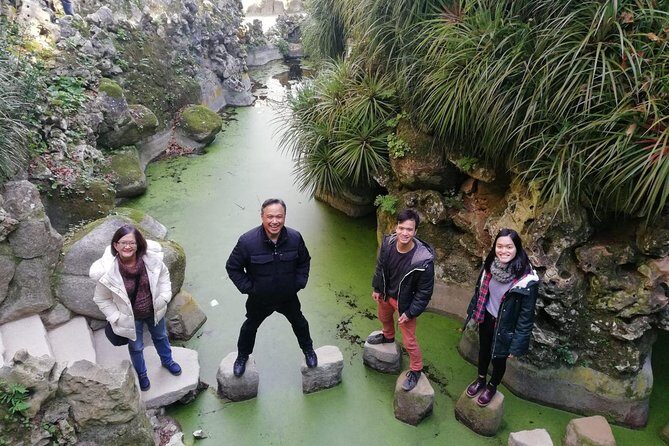
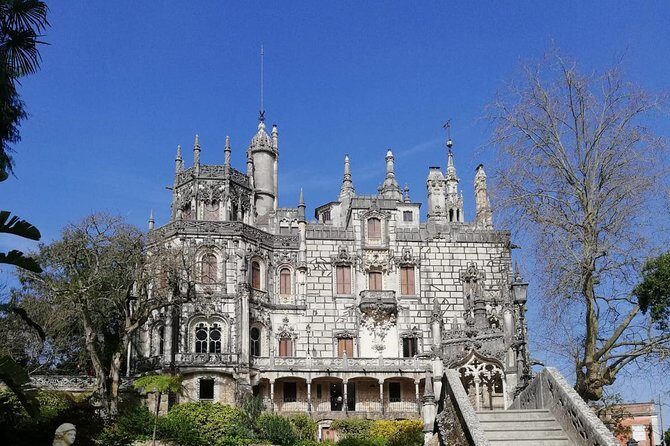
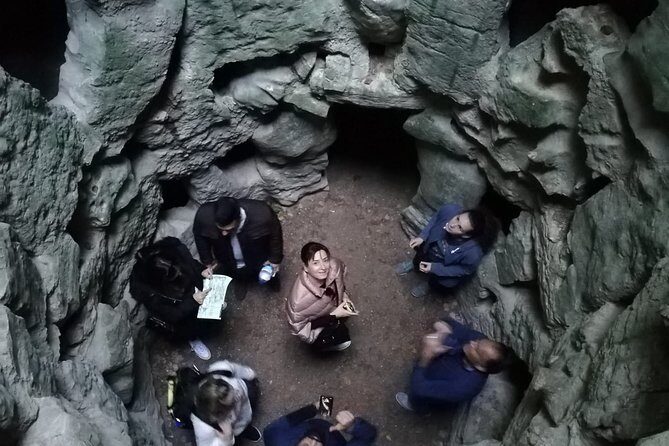
Quinta da Regaleira is the kind of place that makes you stop walking. The grounds feel oversized, like the palace spilled into the hillside. It’s known for powerful influences tied to themes you’ll hear about on this stop—Templars, the Rose Cross, the Order of Christ, and Masonry—and the guide gives you context for why those ideas show up in the site design.
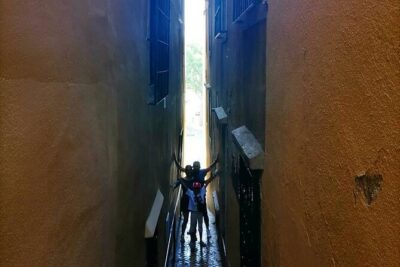
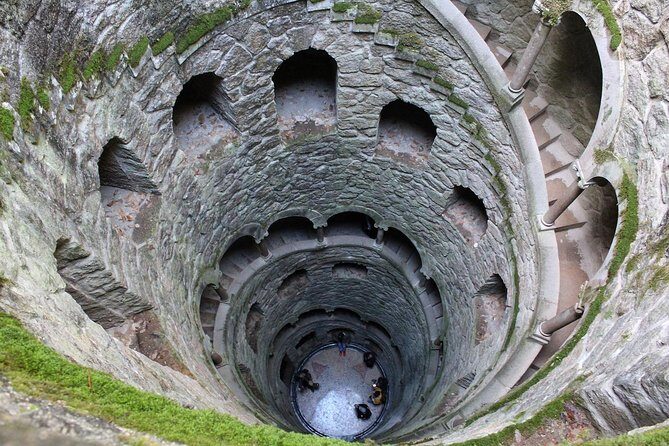
Then there’s the practical wow factor: the gardens are planted with flora from all over the world, and the layout includes tunnels that connect areas. Even if you’re not a symbolism detective, you’ll notice how the space is meant to lead you—turns, levels, and hidden passages that change your view as you move.
A quick heads-up: this stop has admission tickets not included, so treat it like the “main paid” highlight. You may want to bring some patience for entrance timing, and expect that your time inside will be limited since the stop runs about 10 minutes.
Sintra National Palace: Moorish origins plus Gothic and Manueline mix
Next is Sintra National Palace, and it’s an important counterpoint to the later, louder styles. The roots go back to the 8th century during Moorish rule, and it became a favorite palace for many Portuguese kings.
What I like about this stop is the architectural “layers” idea. The palace isn’t one consistent style. You’ll see influences such as Gothic and Manueline, which helps you understand why Sintra’s buildings can look like they’re speaking multiple languages at once.
Since the stop is about 15 minutes, you’ll use this as a focused sampler. The guide’s job is to point you toward the details that matter—so you’re not just taking photos of doors and ceilings without knowing what makes them distinctive.
As with Regaleira, the palace admission is not included, so you’ll pay separately if you want full access.
Castelo dos Mouros: protected by Moors, restored by Fernando II
Castelo dos Mouros brings you back to the defensive side of Sintra. This castle was built in the 8th century by the Moors to protect the area. Then, in the 19th century, it was refurbished by King Fernando II.
Even when you’re not spending a long time inside, this stop helps you understand why Sintra looks the way it does. Palaces are one thing. Fortifications are another. Castelo dos Mouros shows the strategic reason behind the location and why rulers cared so much about this hilltop kingdom-in-miniature.
Admission for this stop is also not included, and it’s about a 10-minute stop. That means: come ready to learn the main historical beats quickly, then use your own eyes afterward to notice what remains.
Other walking tours we've reviewed in Sintra


National Palace of Pena: the style buffet that became famous
If you’re going to remember one palace from this walk, make it Pena. This is where Sintra’s fairytale reputation turns into something tangible.
Pena Palace was built by King Fernando II in the 19th century, and it’s famous for its mix of design influences: Neo-Manueline, New-Gothic, Neo-Renaissance, and Neo-Islamic. That blend is the whole point. You’re not looking at one “period.” You’re looking at a king’s vision of what the future could look like, wrapped in old references.
The palace is also described as one of the 7 wonders of Portugal. Even if you’re not into “lists,” the guide’s explanations help you understand why the place earned that kind of reputation: it’s visually dramatic, but it’s also intentionally constructed to reference multiple traditions.
This stop is around 15 minutes, and admission is not included. Plan for extra time at the entrance, and treat this visit like a guided orientation. If you later want a longer Pena day, you’ll know exactly what to return for.
City Hall, Fonte Mourisca, and Anjos Teixeira: the free stops that add soul

The tour keeps moving after the big palace hits. Several stops are free of admission, and they add texture in a way that many “only palaces” tours miss.
- Camara Municipal de Sintra (City Hall): A beautiful example of Neo-Manueline style. It helps you see that Manueline isn’t confined to palaces and churches—it shows up in civic buildings too.
- Fonte Mourisca: Built in the 20th century, and it’s designed to remember Moorish fountains from the Arabic world. The idea here is cultural memory—Sintra re-uses the past as a visual language.
- Anjos Teixera Museum: Called the first open-air museum in Portugal. Even with a short stop, it’s a reminder that art and storytelling aren’t limited indoors.
These moments are great because you get a break from ticket-entry mode. You also get a more complete picture of Sintra as a living town, not just a theme park of palaces.
Casa Piriquita and Igreja de São Martinho: pastries, then faith
Two stops hit different sides of Sintra life: food culture and religious foundations.
Casa Piriquita is known for Queijadas, and the tradition became famous because it was linked to King Carlos I in the late 19th century. Even if you only pause briefly, this is where the trip turns from architecture to everyday history. It’s a nice moment to ground the day with something tangible—especially if you like to taste what a place is known for.
Then there’s Igreja de São Martinho. The parish started to be built in 1147 after the conquest of Sintra by King Afonso Henriques. This is a useful historical anchor after all the Moorish and later royal layers. It shows how Portuguese authority and religious life expanded after the conquest.
Both stops are marked as free admission, and each is a short visit (about 10–15 minutes). Don’t expect a long church visit here. Instead, use it as a guided “what this means” stop, so you understand why it belongs in the same walking story.
From Lawrence Hotel to Valverde Seteais: ending with a sense of time
The last stretch adds two landmarks that feel like history with a pulse.
Lawrence Hotel is described as the oldest hotel in the Iberian Peninsula. That kind of detail matters more than you’d think. It hints that Sintra has been attracting visitors for a long time—people coming for the scenery, the escapes, and the myth-making.
Then the tour ends near Valverde Sintra Palácio de Seteais, a palace built in the 18th century that now operates as a luxury hotel. Ending here works well because it gives you a “grand finale” feeling without forcing yet another major ticket stop.
You’ll likely walk away with a clearer mental timeline: Moorish origins, Portuguese consolidation, 19th-century royal revival, and then the arrival of tourism culture that kept the story going.
Price and tickets: is $3.60 really worth it?
At $3.60 per person, the tour price is the kind of number that makes you double-check your screen. Here’s the reality check: admission tickets are not included for the big palaces and castle stops. So your money is mainly paying for the guided route and the effort to connect the dots between places.
That can still be a good deal. Think of it this way: palace entrances in Sintra aren’t cheap, but the tour helps you decide what you’re seeing and why it matters. You’ll get a guided “map of meanings” that would be hard to assemble on your own in the same time window.
The free stops also improve value. Not every part of the route is ticketed, so your day doesn’t feel like a constant cash register moment.
If you’re the type who likes to wander with a plan, this setup is ideal. If you want a slow, room-by-room palace day, you may later want separate, self-guided time at the paid sites. The tour is a fast orientation tool plus a guided highlights pass.
Who this tour fits best
This tour is best for you if:
- You want Sintra’s main fairytale sights without spending your entire day in lines.
- You like history that’s explained in a practical way, not just a list of dates.
- You’re okay with short visits at major palaces and you plan to return later if you want deeper exploration.
It may be less ideal if:
- You’re hoping for a fully unhurried palace day (the scheduled stop times are short).
- You dislike splitting your budget between a paid tour and separate entrance tickets at key sites.
One more note from the practical side: the tour requires good weather. If weather is rough, it may be rescheduled or refunded. That’s the kind of detail that can decide whether your day feels smooth or stressful.
Should you book the Sintra Walking Tour – The Portuguese Fairytale?
I’d book it if you want your first Sintra day to make sense. This route gives you a smart mix: the biggest headline palaces, plus free stops that show the town’s character, all in an English-guided format with a small group.
The main reason to choose it is clarity. The explanations—like the way guides such as Kate use pictures to connect distant ideas to what you’re staring at right then—turn Sintra from random spectacle into a storyline you can follow.
Just go in expecting that you’ll pay separately for admissions at the major palaces and the castle. If that fits your plan, this is excellent value for a compact day.
FAQ
Where does the tour start and end?
It starts at Jardim Correnteza, Alameda Combatentes da Grande Guerra 11, 2710-569 Sintra. It ends at Valverde Sintra Palácio de Seteais, R. Barbosa du Bocage 8, 2710-517 Sintra.
What time does the tour begin?
The start time is 11:00 am.
How long is the walking tour?
It runs for about 2 hours 30 minutes.
How much does it cost?
The price is $3.60 per person.
Is the tour offered in English?
Yes, it is offered in English.
Are admission tickets included?
No. Quinta da Regaleira, Sintra National Palace, Castelo dos Mouros, and National Palace of Pena list admission tickets as not included. Other stops on the route are marked free of admission.
What is the group size?
The tour has a maximum of 15 travelers.
Do I receive a mobile ticket?
Yes, the tour includes a mobile ticket.
What happens if the weather is bad?
This experience requires good weather. If it’s canceled due to poor weather, you’ll be offered a different date or a full refund.
What is the cancellation policy?
You can cancel for free up to 24 hours in advance for a full refund.
When do I need to cancel to get a refund?
To get a full refund, you must cancel at least 24 hours before the experience’s start time (local time).