REVIEW · LISBON
Lisbon Sintra Cascais (Best Solution Tour) Private Tour
Book on Viator →Operated by Yellow Cab TT Tours, Unipessoal, Lda. · Bookable on Viator
Eight hours, three worlds, zero car stress. This Lisbon Sintra Cascais private tour is built for people who want a lot of Portugal in one day, without renting a car or negotiating public transit. You get a private guide who can steer the day, plus an efficient route that links Lisbon waterfront icons to ocean cliffs and Sintra’s fairytale palaces.
What I like most is the hassle-free pickup and drop-off. Being collected in Lisbon city and dropped back afterward means you can spend your energy on sights, not logistics. I also love the way the schedule mixes photo stops with real time to wander, so you leave with both recognizable landmarks and a feel for each neighborhood.
One consideration: it’s a long, packed day, and not every stop has admission included. Two of the biggest interior experiences in Sintra (plus Torre de Belem) are listed as not included, and lunch isn’t part of the tour.
In This Review
- Key highlights worth planning around
- How the route actually makes sense: Lisbon first, Sintra next, Lisbon again
- Belem and the Torre de Belém: classic Lisbon, with time to snack
- Estoril and Cascais: Portuguese Riviera energy without the car rental hassle
- Cabo da Roca: where the land ends and you feel it
- Sintra’s iconic mix: gardens, strange symbols, and palaces
- The estate linked to Lord Byron and Francis Cook
- The Palace of Monteiro the Millionaire: symbols everywhere
- Sintra village: cobblestones, sweets, and choosing your palace strategy
- Sintra National Palace, Moorish Castle, Pena Palace: the big three (with different flavors)
- Sintra National Palace (entry not included)
- Moorish Castle: defensive walls with a long timeline
- Pena Palace: the romantic crown jewel
- Back to Lisbon: viewpoints, the oldest church, and Terreiro do Paço
- Miradouro da Senhora do Monte
- Lisbon’s oldest church
- Terreiro do Paço (the rebuilt royal square)
- Price and value: why this private format can be worth it
- Who should book this Lisbon Sintra Cascais private tour
- Should you book it?
- FAQ
- How long is the Lisbon Sintra Cascais private tour?
- Is hotel pickup included?
- Is this tour private?
- What language is the tour offered in?
- Is lunch included?
- Are entrance tickets included for every stop?
- What time does the tour operate?
Key highlights worth planning around
- Private day-trip pacing: your guide can adjust stops and timing to your preferences
- Hotel pickup/drop-off in Lisbon city: no car rental, no added transfers
- Sintra’s must-sees in one run: village time plus major palaces and castle areas
- Cascais and Estoril without stress: a smooth transition from Lisbon coast
- Cabo da Roca photo moment: the western edge of continental Europe
- Big-view finale in Lisbon: Miradouro Senhora do Monte and Terreiro do Paço
How the route actually makes sense: Lisbon first, Sintra next, Lisbon again
This tour is designed like a well-shot photo: start with the Lisbon essentials, then shift to the coast-side towns, then climb into Sintra’s world, and finally work your way back into Lisbon for a grand finishing sweep. That flow matters because Sintra can eat up time fast—crowds, narrow streets, and the sheer number of sites people want to see. By structuring the day this way, you’re less likely to feel stuck or rushed at the worst possible moments.
Your guide is the secret weapon here. You’re not stuck watching a checklist play out with everyone dragged along at the same pace. The tour is private, so if you want extra time in Sintra village for sweets or you’d rather spend more effort on viewpoints, your guide can usually work it in.
Also, the transport is an air-conditioned minivan, which sounds simple until you’re moving between Atlantic wind, hilly Sintra roads, and Lisbon heat. Comfort helps when the day is long.
Other Cascais tours we've reviewed near Sintra



Belem and the Torre de Belém: classic Lisbon, with time to snack
Belem is one of those areas where you can feel Lisbon’s maritime self-confidence. You’ll get free time to explore, take pictures, and stop for the famous Pastéis de Belém custard tarts. The bakery dates to 1837, and that long-lived tradition is part of why this stop feels more like a ritual than a tourist stamp.
You’ll also be near Jerónimos monastery, a standout example of Portugal’s Late Gothic Manueline style. Even if you don’t go inside that specific stop during your time window, seeing it up close helps you understand why Portuguese architecture here looks so theatrical—ornamentation that feels carved for the sea-watching public.
Next comes Torre de Belém. It’s a short stop, and the tower itself is mainly an outside look. Originally built in 1520 under King Manuel I, it was designed to protect ships heading out from Lisbon harbor. For most people, the value is the “icon shot”—the view and the instant recognition that you’re in one of Lisbon’s strongest postcard scenes.
Photo tip: if the light is harsh, step back and shoot from slightly lower or higher than you think. Torre de Belém reads better when the horizon is clean, and you’ll get less glare.
Estoril and Cascais: Portuguese Riviera energy without the car rental hassle
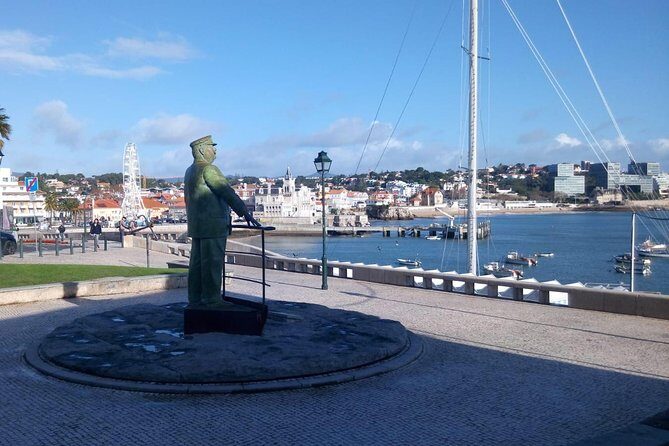
After Belem, the tour heads to Estoril and then Cascais. Estoril’s story is tied to its rise as an international tourist spot in the early 20th century. It’s also linked to the casino scene—one of the largest and oldest in Europe—and the way Portugal’s wartime neutrality drew in royalty and business.
This part of the day isn’t about squeezing every historical detail; it’s about getting your bearings along the coastline. You’ll pass through places that feel more “weekend getaway” than “museum city,” which is exactly what you want if you’ve spent your morning in grand architecture and then still have a mountain day ahead.
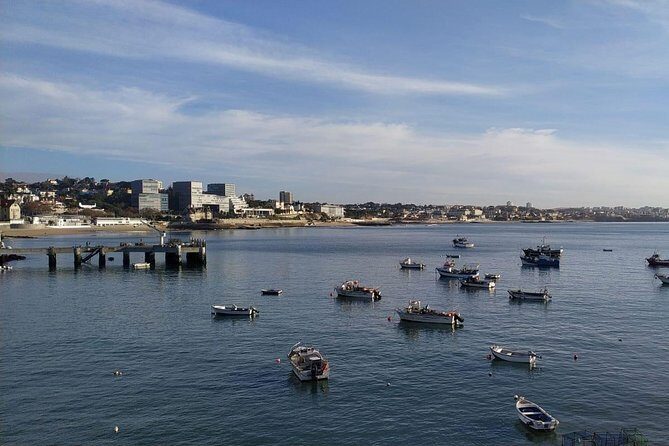
Cascais gives you the richer local texture. The historic center is often called part of the Portuguese Riviera, and the area’s prominence grew when King Luis I and the royal family used Cascais as a summer residence. Later, during World War II and after, the royal connections intensified as European monarchs sought safety in Portugal.
You’ll get time to wander the center and absorb the seaside vibe. The drawback is that this is also where you might feel the day compress: you’re walking, you’re photographing, and then you still have Sintra coming. So don’t over-plan what you’re going to “see”—plan what you’re going to notice.
Cabo da Roca: where the land ends and you feel it
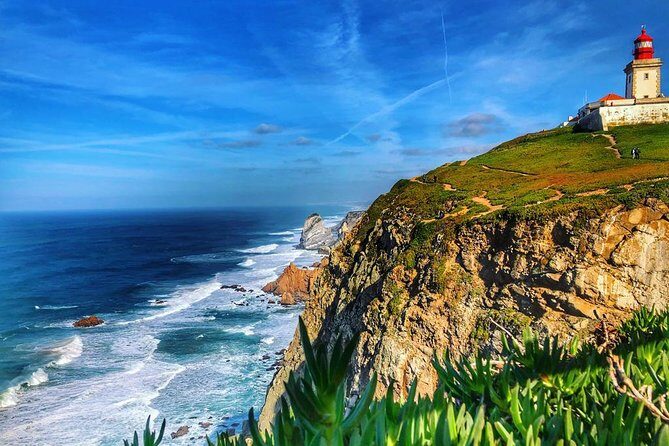
Then you hit one of Portugal’s most dramatic “stop for photos” moments: Farol do cabo da Roca. This is the westernmost point of continental Europe, and the lighthouse is visible from outside, so you’re not stuck waiting around for a long ticket process.
What makes Cabo da Roca special is the scale. Even if you’re standing there for a half-hour, the feeling of land turning to ocean is immediate. It’s also a great mental reset before Sintra, because the cliff air is different from the city air—and it helps you transition.
Practical tip: bring a light layer. Wind at the cape can turn a “quick stop” into a cold one if you only dressed for Lisbon’s streets.
Sintra’s iconic mix: gardens, strange symbols, and palaces
Once you enter the Sintra area, the day turns into a walk through competing styles and big romantic ideas. That’s the point: Sintra isn’t one thing. It’s Gothic ambition, Moorish inspiration, and European romantic architecture all in the same mountainous pocket.
Other private Sintra tours worth comparing




The estate linked to Lord Byron and Francis Cook
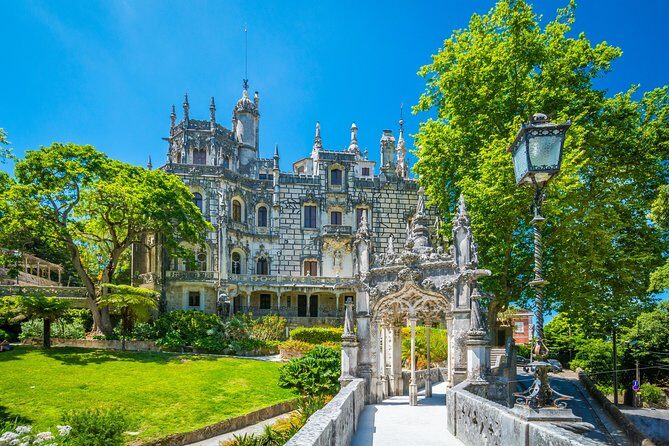
You’ll visit an estate tied to multiple foreign families, and it’s described as having inspired Lord Byron. Later, in the mid-19th century, Francis Cook—a wealthy English merchant—acquired the property and shaped it into an impressive summer residence.
The architecture is described as influenced by Romanticism and Mudéjar Moorish Revival, with Neo-Gothic elements. Translation for your planning brain: this is where Sintra stops looking like “pretty houses” and starts looking like an intentional art project—like someone wanted to build a dream and then add details until it felt unreal.
You might find it easy to rush here, but don’t. The value is in slowing down for a few minutes and noticing how the design references multiple eras at once.
The Palace of Monteiro the Millionaire: symbols everywhere
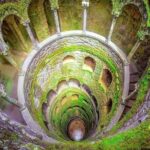
Next is another Sintra highlight that’s framed as mysterious and intriguing: the Palace of Monteiro the Millionaire. The name comes from António Augusto Carvalho Monteiro’s nickname, and this estate includes a romantic palace and chapel plus a park with lakes, grottoes, wells, fountains, and lots of constructed features.
The description also calls out symbols tied to alchemy, Masonry, the Knights Templar, and Rosicrucians. That means you’ll likely get more out of this stop if you treat it like a visual puzzle. Look for repeated motifs and don’t expect a straight museum label experience—this is more about atmosphere and meaning.
If you like architecture with a story, this is the type of stop that makes you remember Sintra later, even after you’ve forgotten the exact layout of the village streets.
Sintra village: cobblestones, sweets, and choosing your palace strategy
Centro Histórico de Sintra is your break from palace grandeur into human scale. You’ll have time in the village, where cobbled streets, traditional shops, and cafés create a very walkable feel.
Sintra’s village has been classified as a World Heritage Cultural Landscape, and it keeps the colors and architecture from the time of the Portuguese monarchy, when this region served as a summer vacation spot. In practical terms, this is where you can slow your pace, regroup, and decide how you want to spend your energy.
The tour description mentions classic sweets like Travesseiros and Queijadas. You can treat this as your planned snack stop—use it to avoid hunger later when interior visits demand time and stamina.
One smart move: pick one palace you care about most, then treat the others as “check, enjoy, and don’t obsess.” A packed day is easier when you set that expectation early.
Sintra National Palace, Moorish Castle, Pena Palace: the big three (with different flavors)
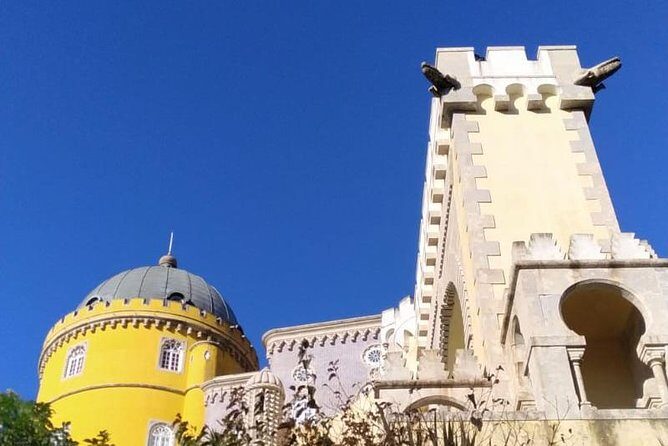
The tour includes stops in and around Sintra’s most famous palace-and-castle areas.
Sintra National Palace (entry not included)
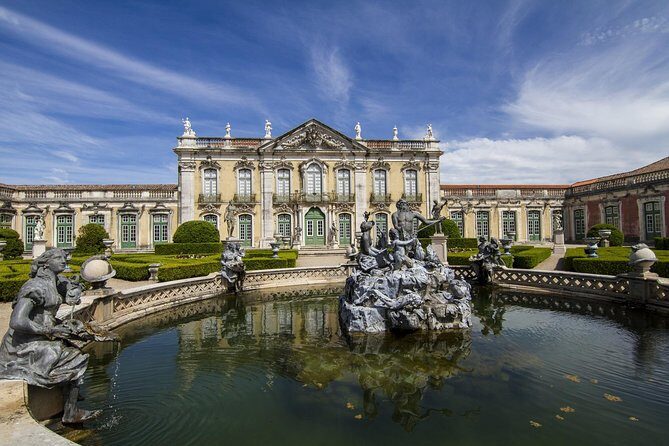
Sintra National Palace is described as having roots in a Moorish governor residence, later used by Portuguese kings. Today’s palace blends Gothic, Manueline, Moorish, and Mudéjar styles due to building campaigns across centuries.
The chimneys from the kitchen are a notable visual landmark, visible even from distances. It’s also described as the main palace in the historical center, with the choice to visit during your free time in Sintra village.
Because admission isn’t included, plan to pay attention to your guide’s timing here. If you’re the kind of traveler who likes to roam quietly, this can be a great stop. If you’re more interested in sweeping views, you might get more satisfaction later at Pena Palace and the castle areas.
Moorish Castle: defensive walls with a long timeline
Then you head to the Moorish Castle. The description places its origins around the 8th century in Muslim Iberia, where it served as the central fortified place in an agricultural territory. After the conquest of Lisbon by D. Afonso Henriques, the castle surrendered voluntarily to Christian forces.
The tour notes that Afonso Henriques entrusted the castle to its inhabitants, granting privileges in a foral as a mechanism for security and development. That’s a lot of political backstory for a place that mainly looks like stone and walls, but it gives you a reason to pay attention. When you’re standing there, you’ll be better able to imagine the settlement life tied to those defenses.
This is also the part of Sintra that can feel like a workout—steep paths and uneven ground. Good shoes matter more than fashion.
Pena Palace: the romantic crown jewel
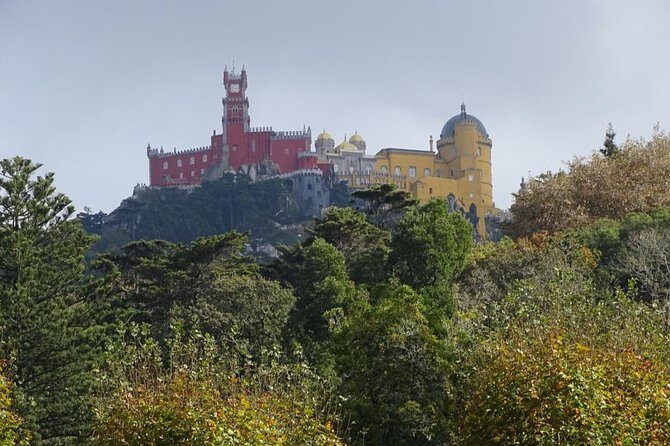
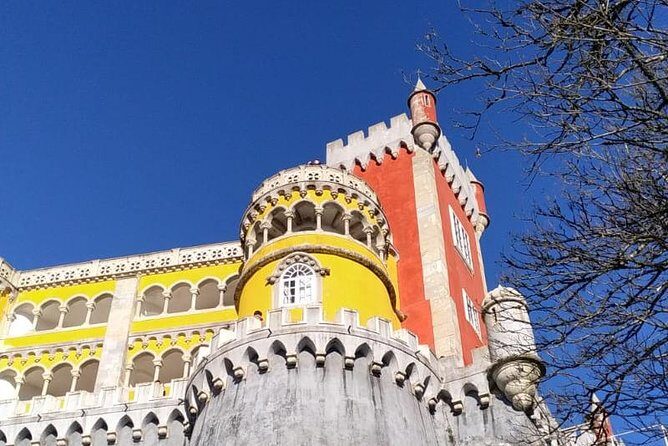
Pena Palace is described as the crown jewel of Portuguese romantic architecture. It’s built on top of Sintra mountain, reusing an abandoned 16th-century monastery, and it reflects King Ferdinand II’s love for his wife and for Portuguese cultural heritage.
The palace is mid-19th century and is called a colorful masterpiece with breathtaking landscapes in an immense garden. Even if you only do a portion of the complex, this is the stop that tends to grab people visually. It feels designed for drama—like the building was made to be seen from far away and still reward you when you get close.
If you only have patience for one big interior, this is often the one to protect. If you’re energy-limited, you can still get plenty of value from the view points and the overall scene.
Back to Lisbon: viewpoints, the oldest church, and Terreiro do Paço
After Sintra, you’ll return to Lisbon and finish with iconic viewpoints and city-scale landmarks. This return leg is important because it prevents the trip from feeling like “only Sintra.” Lisbon is part of the story too, especially the way it shows off its hills and rebuilt center.
Miradouro da Senhora do Monte
You’ll stop at Miradouro Da Senhora do Monte, one of the highest viewpoints in Lisbon. It gives a panoramic overview above Mouraria and Graça, with major landmarks on the horizon. The tour calls it a mandatory picture stop, and it’s a great one because it makes the city feel navigable again after a day in palaces and cliffs.
Practical tip: arrive with your camera ready, but also take 10 seconds to put it away. The view is the reason you’re here.
Lisbon’s oldest church
Next is the oldest church in the city, built after D. Afonso Henriques’ conquest in 1147. It survived many earthquakes and was modified and restored multiple times, so you’re looking at a mix of architectural styles. It’s classified as a National Monument in 1910.
This is a great “human history” pause. After all the Sintra spectacle, it’s nice to see Lisbon’s continuity—one building that has been adjusted over and over instead of replaced by a single era of grand design.
Terreiro do Paço (the rebuilt royal square)
Finally, you’ll end at Terreiro do Paço—called Terreiro do Paço because it was known as the location of Paços da Ribeira until the 1755 earthquake. The square was remodeled as part of Marquês de Pombal’s rebuilding plan.
It’s still one of Europe’s biggest city squares, and standing in it gives you a sense of scale that’s hard to get anywhere else in Lisbon.
If you’re tired by the end, that’s normal. The end point is an open space, so you can breathe and still feel like you finished strong.
Price and value: why this private format can be worth it
At $278.33 per person for about 8 hours, the value depends on one thing: what you would pay in time and stress if you tried to stitch this day together yourself. This tour includes private transport by air-conditioned minivan and hotel pickup and drop-off within Lisbon city, which can save real money if you were considering multiple taxis or rides.
The itinerary also mixes free-admission elements (like your Belem time and several scenic stops) with a couple of paid admissions not included (Torre de Belém and Sintra National Palace are specifically listed as not included). That’s actually fair: you’re not paying for doors you aren’t going through, and you’re getting a guided plan that helps you decide where the time matters most.
The most praised part from past guests is often the guide experience—clear English, friendly explanations, and the ability to tailor the day. People have had excellent results with guides such as Jorge, Paula, David, Guy, and Isabel, and the theme is consistent: the guide makes the sites click, not just get checked off.
Add the private format and you get undivided attention. You can ask why something was built, what changed over time, and how the stories connect across the day.
Who should book this Lisbon Sintra Cascais private tour
This tour fits you if you want a “best-of” day and you hate logistics. It’s also a good fit if your travel group includes a mix of interests—seaside towns, architecture, and big scenic viewpoints—because the schedule gives each type of traveler something to grab onto.
It’s especially worth it when you want Sintra but you don’t want to plan transport between spots yourself. Sintra’s spacing can be frustrating, and this route keeps you moving with a guide and transport ready.
If you prefer slow travel—hours for one palace, long café breaks, and lots of wandering without a schedule—you may find the day feel tight. In that case, consider staying overnight in Sintra and going easier.
Should you book it?
I’d book this tour if you’re in Lisbon for a short time and want to cover Belem, Cascais/Estoril, Cabo da Roca, and the major Sintra palaces in one go. The private vehicle and pickup make it feel smooth, and the guide-led pacing turns a long day into something you can actually handle.
I wouldn’t book it if you know you want a relaxed, unstructured day. The best part of this tour is how efficiently it sequences highlights—great for coverage, less great for slow strolling.
If you do book, aim for comfortable shoes and pack layers. You’ll be glad you did when the views are worth it and the air turns cooler on the cape and in the Sintra hills.
FAQ
How long is the Lisbon Sintra Cascais private tour?
It runs about 8 hours.
Is hotel pickup included?
Yes. Pickup is offered from your hotel within Lisbon city, and you’re also dropped back there.
Is this tour private?
Yes. It’s a private tour/activity, and only your group participates.
What language is the tour offered in?
The tour is offered in English.
Is lunch included?
No. Lunch is not included.
Are entrance tickets included for every stop?
Not for every stop. Some parts list admission as free, while Torre de Belém and Sintra National Palace are listed as admission tickets not included.
What time does the tour operate?
It runs Monday through Sunday from 8:30 AM to 5:00 PM.