REVIEW · CASCAIS
Sightseeing tour of Sintra Cascais natural park
Book on GetYourGuide →Operated by Moby Dick tours · Bookable on GetYourGuide
Four hours, and the Atlantic feels close. This Sintra-Cascais nature tour hits Guincho Beach viewpoints and Cabo da Roca cliff views, plus cultural stops like Santuario da Peninha, with a guide who explains what you’re seeing in plain language (Pedro is a great example). I also like how the route strings together forests, sea views, and small-town moments without dragging your day. The main drawback is the walking: expect uphill and downhill stretches, so it’s not a fit for mobility impairments.
For $53 per person, you’re really buying guided transportation and a tight sightseeing plan across the coast and hills. Pickup is available from pre-set points in Cascais, Sintra, and Estoril (and other spots in Sintra/Cascais), which makes this an easy way to cover more than you’d manage on your own in a half-day.
In This Review
- Key things you’ll notice on this tour
- Why this Sintra–Cascais tour works in just 4 hours
- Pickup and getting to the park without stress
- The Guincho Beach coastal drive: cliffs and real ocean drama
- A hillside viewpoint stop: panoramic sea views (and Lisbon on the right day)
- Santuario da Peninha: when the forest has a story
- Cabo da Roca: the edge-of-continental-Europe moment
- Colares wine region break: tasting time, but not a full meal plan
- Azenhas do Mar: your final cliff-top village fix
- Guides and pacing: what “good” feels like on this route
- Price and value: is $53 a bargain or a gamble?
- Who should book this tour (and who should skip it)
- Should you book this Sintra–Cascais Natural Park tour?
- FAQ
- How long is the Sintra–Cascais Natural Park sightseeing tour?
- How much does it cost?
- Where can I be picked up?
- Is pickup free from all locations?
- What languages does the guide speak?
- Are tickets included?
- Is wine or food included?
- Is the tour suitable for people with mobility impairments?
- What should I bring?
Key things you’ll notice on this tour
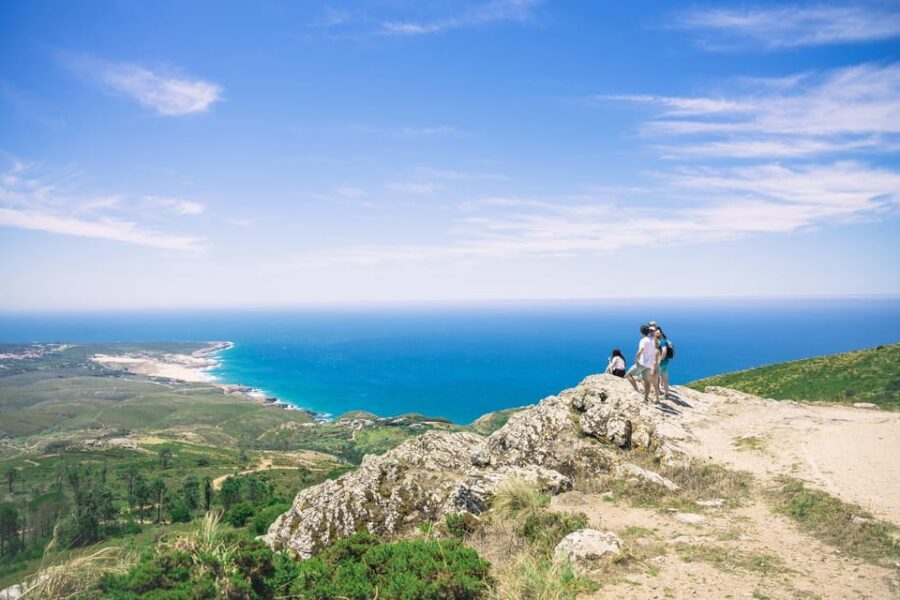
- Guincho Beach coastal drive gives you dramatic cliff-and-ocean angles fast
- Viewpoints in the hills include panoramic sea views toward Cascais and even Lisbon on clear days
- Santuario da Peninha adds cultural weight to the scenery with an ancient sanctuary in the forest
- Cabo da Roca cliff time puts you at the edge of continental Europe for photos and a guided walk
- Colares wine region stop includes a break and food-tasting time (wine/snacks are not included)
- Azenhas do Mar village ends the day with postcard views from cliff-top streets
Why this Sintra–Cascais tour works in just 4 hours
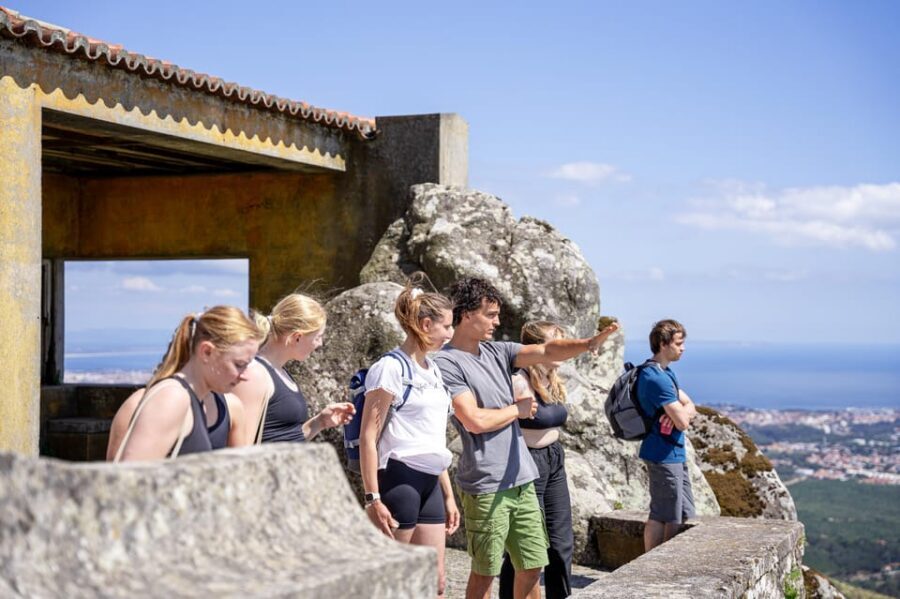
Sintra–Cascais Natural Park can feel huge. A lot of people try to DIY it, then end up spending half the day on buses or waiting around. This tour keeps things focused. You get a van ride to the best zones, a series of photo stops, and short stretches where you actually take in the views and the story behind them.
What I like most is the rhythm: coast, then hills, then back to cliffs and villages. That mix matters because the park’s charm is the contrast—rocky Atlantic edges, forested paths, and the little human details of coastal towns.
One more plus: your guide’s role isn’t just pointing. The best example from the guide team is Pedro, who’s described as relaxed, funny, and quick to answer questions, with real knowledge of land, people, and history. Even if you’re not a “facts” person, it helps you understand why each viewpoint is placed where it is.
Other Cascais tours we've reviewed near Sintra
Pickup and getting to the park without stress
This tour uses a van and includes pickup from predefined locations. You can meet the group at options like Cascais train station, Estoril train station, or Sintra train station, and there’s also free pickup for locations in Sintra and Cascais. If you’re starting from Lisbon, you’ll need to contact the provider because there may be an added cost depending on where you are.
Why this is valuable: Sintra and Cascais are easy to reach, but getting from viewpoint to viewpoint is where DIY plans get messy. With pickup handled, you can spend your energy on the views instead of route-planning.
Also note that the trip is not designed for limited mobility. The day includes miles of walking uphill and downhill, even if the stops are timed for photos and viewpoints.
The Guincho Beach coastal drive: cliffs and real ocean drama
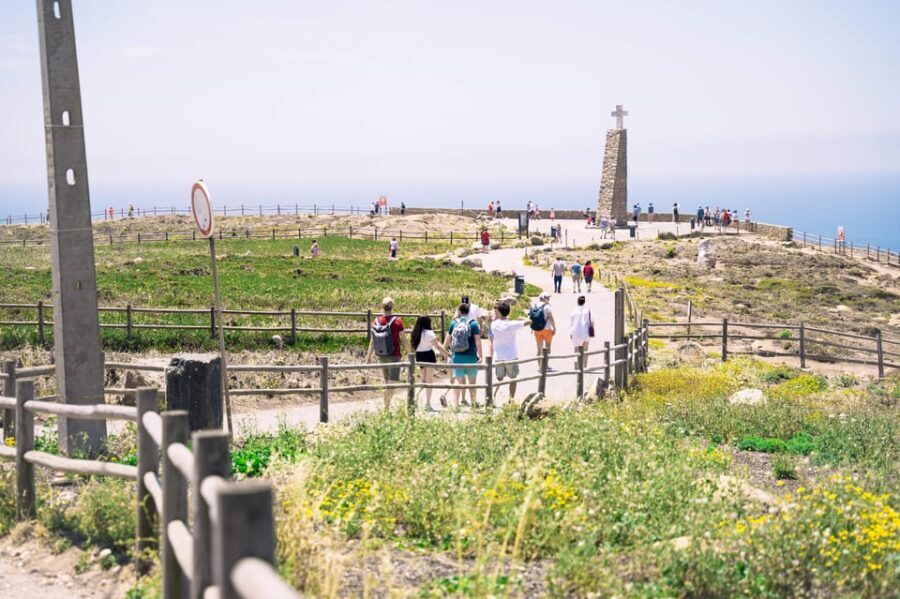
Your day starts with a drive along the coast to Guincho Beach. This isn’t a long hike kind of stop. It’s more about taking the road viewpoint style—where the Atlantic shows up big, with rugged cliffs and waves doing their thing.
Guincho is a strong opening because it sets expectations. You’ll see how the coastline behaves here: wind, open water, and sharp edges rather than sheltered beaches. If you’ve ever wondered why Portugal’s west coast looks so powerful in photos, this is where you start to get it.
Practical tip: if it’s breezy (and it often is), dress like you’ll feel it. Comfortable shoes still matter, even if your “walking” is mostly short steps.
A hillside viewpoint stop: panoramic sea views (and Lisbon on the right day)
Next you head into the hills for a viewpoint kick stop. The idea is big-picture orientation: you can see the coastline stretched out, the sea meeting the sky, the Cascais area, and sometimes even Lisbon from high ground.
This stop is useful even if you don’t go mad with photography. It helps you connect the later places you’ll see. After a high viewpoint, Cabo da Roca doesn’t feel random—it feels like the western edge of a whole system of cliffs and valleys.
What to watch for: timing and weather. Cloudy days can soften distances, while clear skies reward you with the “wow, we’re really high up” feeling.
Santuario da Peninha: when the forest has a story
From the hills you move into forested areas to reach Santuario da Peninha. This is the cultural anchor of the day. You’re not just walking in greenery for greenery’s sake. The sanctuary is described as an important cultural site with centuries of history and spirituality.
Why I think this matters: nature parks can blur together if every stop is only scenic. Adding a site like Peninha gives you context. It turns a photo stop into an actual sense of place.
You’ll also feel the temperature shift that often happens in forest zones. If coastal wind makes you chilly, the woods can feel calmer—then the trip swings you right back to Atlantic drama later.
Cabo da Roca: the edge-of-continental-Europe moment
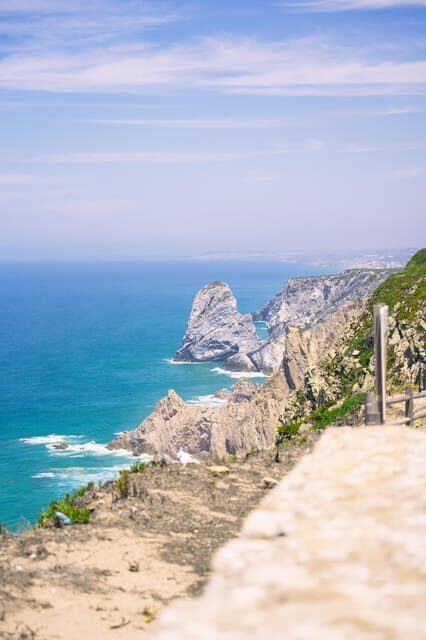
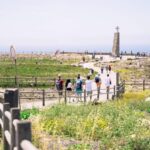
Cabo da Roca is one of the most famous “stand here and feel small” places on the Portuguese coast. You’ll have about 45 minutes there, with a mix of photo time, a guided component, and sightseeing.
What you should expect: the cliff edge experience. Descending from the hills to Cabo da Roca is part of the payoff. Once you’re at the westernmost point of continental Europe, the wind is often the star. That’s the point—your senses are working overtime.
The guided tour element is a big deal here. It helps you understand what you’re looking at beyond the famous line on a map. One strong detail from the guide experience: the trip can include time near the fishing village area around Cabo da Roca, adding a more local feel than just the cliff-and-photos routine. In some cases, there’s also mention of market-style moments, which can be a nice change of pace.
Practical tip: bring layers you can manage at the cliff. Wind can flip how “comfortable” you feel fast.
Colares wine region break: tasting time, but not a full meal plan
After the big coastline hits, the tour shifts to a calmer rhythm with time in Colares, in the wine region area. You’ll get a break plus an aperitif and local snacks / regional food tasting time.
Two important notes:
1) Wine and snacks are not included in the tour price.
2) That tasting time is still valuable because it gives you structured opportunity to try local tastes without guessing where to go.
Colares matters here because it’s not just “pretty views and then food.” It’s a specific regional identity along the coast. Even a short tasting moment can make the day feel less like a drive-by sightseeing hit and more like a cultural stop.
If you’re sensitive to long breaks, you might want to balance your plan: use the time to refuel, but keep it light so you still feel good for the final village walking and photos.
Azenhas do Mar: your final cliff-top village fix
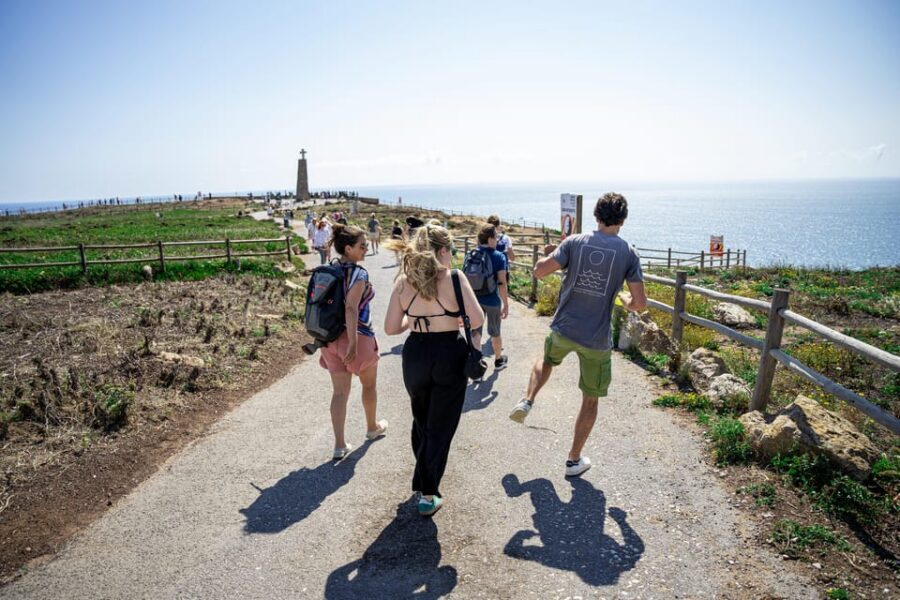
Your last stop is the village of Azenhas do Mar, described as perched on cliffs overlooking the sea. The feel here is slow and visual: narrow streets, whitewashed houses, and that salty-air atmosphere that only coastal towns manage.
This is a good ending because it’s a different kind of experience from the cliffs at Cabo da Roca. Cabo da Roca is dramatic and wide open. Azenhas do Mar is intimate and made for drifting along for a bit, then snapping a few photos when the angle is right.
If you’ve got camera battery anxiety, keep an eye on it here. The best shots tend to be the ones you take after you’ve been walking, when you’ve found the street that frames the sea correctly.
Guides and pacing: what “good” feels like on this route
The common thread in the guide experience is the mix of humor, comfort, and real explanations. Pedro is highlighted as knowledgeable in how he connects places to people and history, and he’s described as easy to talk to—so questions don’t feel like an interruption.
Pacing is also part of why this works. The total time is 4 hours, and stops are built around photo moments plus short sightseeing windows. That keeps the day from stretching into a full itinerary grind. You’ll still walk uphill and downhill, though, so don’t treat it like a sit-and-stare tour.
If you’re the type who likes to keep moving but still wants context, this pacing fits.
Price and value: is $53 a bargain or a gamble?
At about $53 per person for a 4-hour guided experience with transportation, you’re paying for:
- van transport across multiple zones
- a live guide (English, Portuguese, Spanish)
- guided stops and scenic viewing time
What you’re not paying for: tickets, and wine or snacks. That means you should plan a small extra budget if you want to taste things in Colares or buy drinks.
Is it worth it? For most people, yes—because the time-saving is real. Covering Guincho, Peninha, Cabo da Roca, and Colares efficiently on your own would likely cost you time and transit complexity. The guide also reduces decision fatigue: you’re not trying to guess which overlook is the best one for your limited time.
Where it might not be the right value: if you already know you want to spend hours hiking on your own schedule, a tight half-day guided route can feel limiting.
Who should book this tour (and who should skip it)
This tour is a strong match if you:
- want a short, well-paced way to experience Sintra–Cascais Natural Park
- care about viewpoints and a bit of cultural context (Peninha)
- like guided context without a museum-like pace
- can handle uphill and downhill walking on uneven terrain
Skip it if you:
- have mobility impairments or need step-free access (the route isn’t suitable)
- want a long, slow beach day with minimal walking
- expect all food and wine to be included (they aren’t)
Should you book this Sintra–Cascais Natural Park tour?
I’d book it if your priority is “maximum Portugal coast in half a day,” with real stops rather than random pull-offs. The combination of coastal viewpoints, Cabo da Roca, and the cultural stop at Santuario da Peninha makes the tour feel like more than a scenic drive.
I’d think twice only if walking uphill/downhill is a problem for you, or if you don’t want to spend a chunk of your time in wind and cliff-edge conditions.
If you’re flexible and comfortable with a brisk sightseeing pace, this is a good-use-of-time tour.
FAQ
How long is the Sintra–Cascais Natural Park sightseeing tour?
The tour duration is 4 hours.
How much does it cost?
The price is $53 per person.
Where can I be picked up?
Pickup is available from your accommodation or the Cascais train station, Sintra train station, or Estoril train station. There are also other pickup locations available.
Is pickup free from all locations?
Pickup is included from predefined locations. Pickup in Sintra and Cascais is free for locations there. For pickups in Lisbon, you may be charged depending on where you are.
What languages does the guide speak?
The live tour guide speaks English, Portuguese, and Spanish.
Are tickets included?
No. Tickets are not included.
Is wine or food included?
Wine, snacks, and other local foods are not included in the tour price.
Is the tour suitable for people with mobility impairments?
No, it is not suitable for people with mobility impairments due to uphill and downhill walking.
What should I bring?
You should bring comfortable shoes.