REVIEW · CASCAIS
Surf and Bodyboard Classes in Sintra
Book on Viator →Operated by Surf At Surf School · Bookable on Viator
A few steps from the city, you’re on real surf water fast. This Sintra-area surf and bodyboard class is built for first-timers and improvers, with an instructor close by and gear handled for you. I especially liked the small group feel and the way teaching adapts to different levels, not one-size-fits-all. One note: the exact timing can shift because sessions depend on sea conditions and tides, so you’ll want to stay flexible.
The basic rhythm is simple: meet near public transport, get warmed up on land, then head into the Atlantic to try what you practiced. Classes run about 1h30 for the in-water lesson, even if the overall slot is listed at around 2 hours. If you’re hoping for a rigid schedule, that’s the main potential drawback.
In This Review
- Key Points Worth Knowing
- Getting Oriented at Praia Grande in Colares
- How the 1:5 Instructor Ratio Changes Everything
- Praia das Macas: Learning the Ocean on a Real Surf Spot
- Praia de Carcavelos: When the Skill Test Gets Real
- Bodyboarding and Surfing: The 90-Minute Learning Rhythm
- Timing Around Tides: Why Your Start Time Might Flex
- Value Check: Is $41.40 a Good Deal?
- What You’ll Notice in the Water (Even as a Total Beginner)
- Who Should Book This Surf and Bodyboard Class
- Practical Tips Before You Go
- Should You Book Surf At Surf School?
- FAQ
- Where does the class start and end?
- How long is the class?
- Are equipment and boards included?
- What beaches are used during the session?
- Do they teach in English?
- What’s the group size and instructor ratio?
- What happens if the weather is poor?
Key Points Worth Knowing
- Small class size (max 10), with close guidance that doesn’t feel crowded
- Instructor ratio of 1:5, so you get feedback while you’re still in the learning moment
- Equipment included, from the board to the gear you need to get comfortable
- Two possible beaches (Praia das Macas and Praia de Carcavelos), chosen based on conditions
- English offered, plus clear instruction you can follow even if it’s your first time
- Daily sessions in season, with at least two class times and more flexible timing outside summer
Getting Oriented at Praia Grande in Colares
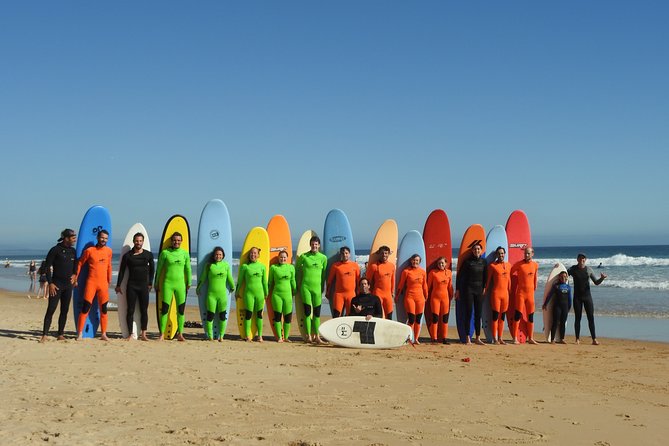
Your day starts at Surf at Praia Grande, Av. Alfredo Coelho 41, 2705-329 Colares. It’s an easy setup for a practical reason: you’re not trying to squeeze lessons into some remote commute. The listing also notes it’s near public transportation, which matters if you’re riding trains and local buses around the Sintra–Cascais corridor.
In practice, the first minutes are about getting everyone sorted—figuring out levels, fitting equipment, and doing a warm-up before you head to the water. If you’re nervous, that initial warm-up rhythm helps. One clear theme from the reviews is that instructors keep explanations simple and close to what you’re about to do.
If you're still narrowing it down, here are other tours in Cascais we've reviewed.



How the 1:5 Instructor Ratio Changes Everything
The class structure is what makes this feel like real instruction instead of just time in the water. You’ll be in a shared group with other students, but the format is designed so one instructor is responsible for about five people. That’s small enough for meaningful corrections.
You can feel the difference when you get taken aside to learn the basics before trying them out. More than once, people describe the teaching as step-by-step: warm up, then go into the Atlantic to practice, with instructors staying close to explain what’s good and what to adjust. That “watch and correct” approach is how beginners progress quickly and how intermediate students stop repeating the same mistakes.
One more detail that matters: attention to different levels is built into the setup. So if you’re brand-new and your group has people a bit more confident, you’re less likely to get brushed aside or rushed through the same movements.
Praia das Macas: Learning the Ocean on a Real Surf Spot
Praia das Macas is one of the two beaches used for the course, depending on conditions. For me, this is an important part of the value. Instead of training in an artificial or overly protected area, you get on a beach with real surf character. That helps you learn how to read waves, not just how to stand on a board.
For first-timers, the main challenge is timing: getting out, positioning, and catching something that actually matches your skill level. Reviews back up the idea that instructors keep you focused on basics first, then move you into attempts in the water. That order matters. If you go in too soon without a plan, you waste energy. If you learn the basics first, your practice time counts.
A drawback to keep in mind: because the school chooses the beach based on sea conditions, what you’ll experience can vary day to day. The upside is that it usually means the instructors are trying to match your session to what the ocean will allow that day.
Praia de Carcavelos: When the Skill Test Gets Real
Praia de Carcavelos is the second possible stop. This matters because different beaches can feel different under your feet. Wind, swell direction, and wave shape all change how a board behaves and how hard you’ll have to work.
If you’re moving beyond “standing up” and want to learn more control, a more challenging beach setup can help. Reviews repeatedly describe the class as organized with instructors who care about improvement, and that often means you get feedback during actual attempts, not only theory.
Carcavelos is also a good reminder of why the course timing is flexible. The listing is clear that sessions are scheduled at times defined according to sea state and tides. Translation: you’re not controlling the ocean, so you’re planning around it. That’s normal for surf schools, but it’s worth knowing up front so you don’t build a rigid day around fixed hours.
Bodyboarding and Surfing: The 90-Minute Learning Rhythm
You’re looking at about 1h30 for the actual class, taught in a structured way: warm up, then basics, then practice attempts. The course covers both surf and bodyboard instruction, which is great if you’re curious about both but not sure which one you’ll love more.
In a short lesson like this, you won’t master everything. What you will do is get your foundation in place: how to start, how to move, and what to focus on when a wave comes your way. One review described a first-time experience that felt welcoming and methodical—learning basics, then entering the Atlantic with instructors close enough to explain what was working and what needed improvement.
For families, that same structure helps. Kids can get excited fast, but they still need someone to keep the lesson anchored. A family review mentioned a great mood, clear explanations, and kids who were so focused they didn’t manage to get up afterward—meaning the session gave them real effort and a big payoff.






Timing Around Tides: Why Your Start Time Might Flex
In summer, classes run every day of the week at least twice a day. Outside summer season, the pattern shifts to once a day, also every day of the week and on weekends, with the exact time agreed based on sea conditions and class level. That’s not just fine print—it affects how you plan your day.
If you’re visiting in peak season, expect more frequent options, which is great if you’re trying to fit lessons between sightseeing. If you’re visiting off-season, you’ll want to treat the lesson as a scheduled window that the school can adjust slightly for the best conditions for your group.
This is also one reason the lesson lists it as requiring good weather. If conditions are poor, you might be offered a different date instead of forcing a frustrating session.
Value Check: Is $41.40 a Good Deal?
At $41.40 per person for roughly a 2-hour slot (about 1h30 of instruction), this is priced like a solid entry-level surf experience. The value comes from a few things that aren’t “small details”:
- Gear is included, so you’re not paying extra for rentals or showing up without the right kit.
- The instructor ratio is strong, which usually costs more than you’d expect if you tried to hire private coaching.
- You actually get practice attempts, since the class is structured to move from warm-up to water fairly quickly.
There’s also a small lesson in booking strategy. One reviewer regretted booking through a third party because they felt booking directly could cost less (they estimated a savings of about 20%). I can’t guarantee that for every booking channel, but it’s a fair reminder: check whether direct booking offers a better rate than a reseller.
What You’ll Notice in the Water (Even as a Total Beginner)
The strongest recurring theme is supportive coaching. First-time surfers described instructors as helpful and close by, with quick explanations about what was good and what to improve. That kind of feedback prevents the most common beginner pattern: repeating the same movement errors until your energy runs out.
You’ll also likely notice the “human scale” aspect. One review mentioned a pleasant surf school with a personalized feel and good humor, even during a busy season, with teaching outside the worst of the tourist crowds. Even if you come solo, the vibe should feel more like a small group lesson than a conveyor belt.
And if you’re traveling with kids, look for the same “clear explanations + good mood” setup described in the family review. A calm, structured teacher helps kids stay engaged, and it helps you feel less stressed watching them learn.
Who Should Book This Surf and Bodyboard Class
This course fits best if you want a guided experience without turning it into a major production. I’d put it at the top of the list for:
- Total beginners who need step-by-step instruction and close correction
- Intermediates who want targeted feedback while practicing
- Families looking for a first shared activity that still feels organized
- People who prefer small groups and don’t want to feel swallowed by a big class
If your plan is ultra-fixed—like you have a strict dinner reservation with no flexibility—this may feel slightly annoying because the school tunes timing to tides and sea conditions. That doesn’t mean it’s bad. It just means you’ll have an easier day if you build in a little wiggle room.
Practical Tips Before You Go
Here’s how to make the session feel smooth from the start:
- Bring a swimsuit you can actually use twice if you’re doing both surf and bodyboard. Many people start cold and warm up fast once they’re moving.
- Wear gear that doesn’t fight you. If your clothing is hard to change, the turnaround after the water can feel slower.
- Be ready for conditions to change. The beach choice between Praia das Macas and Praia de Carcavelos is tied to what the sea is doing that day.
- Arrive with the mindset of learning, not conquering. In a 1h30 class, progress comes in small wins: better timing, better stance, and catching more usable waves.
Should You Book Surf At Surf School?
I think you should book this if you want real coaching in a small group and you’re happy to let the ocean set the timing. The combination of included equipment, English instruction, and the instructor-to-student ratio is a strong value for the price.
If you hate schedule uncertainty, plan around it. The school runs sessions at least twice daily in summer, but outside summer it’s once a day with timing agreed based on sea state and your group level. That flexibility can be frustrating only if you pack your day too tight.
Overall, this looks like a practical, friendly way to learn surf or bodyboard in the Sintra/Cascais area—especially if you’d rather get guidance than just chase waves alone.
FAQ
Where does the class start and end?
The meeting point is Surf at Praia Grande, Av. Alfredo Coelho 41, 2705-329 Colares, Portugal. The activity ends back at the same meeting point.
How long is the class?
The shared class lasts about 1h30 in the water. The overall duration is listed as approximately 2 hours.
Are equipment and boards included?
Yes. All necessary equipment is included in the class.
What beaches are used during the session?
The itinerary includes Praia das Macas and Praia de Carcavelos. Which beach you go to can depend on sea conditions.
Do they teach in English?
Yes, the class is offered in English.
What’s the group size and instructor ratio?
The experience has a maximum of 10 travelers. The teaching format is 1 instructor for every 5 students, with special attention to different levels.
What happens if the weather is poor?
The experience requires good weather. If it’s canceled due to poor weather, you’ll be offered a different date or a full refund.