REVIEW · SINTRA
Know Sintra through the eyes of a local archeologist private tour
Book on Viator →Operated by Mr. Local Tours · Bookable on Viator
Sintra has secrets you can see. This private tour with local archaeologist Diogo turns three very different ruin areas into one clear story of how people lived, worshipped, and built here.
I love the excavation-focused approach at Castelo dos Mouros, and I love that you get comfortable transfers plus snacks during the day. A possible drawback: the time is limited at each stop, so if you want long museum-style reading everywhere, plan to take notes fast and ask lots of questions.
In This Review
- Key things to know before you go
- Where You Start in Sintra and Why the Format Matters
- Castelo dos Mouros: Moorish Castle Gates and an Open-Air Excavation
- Santuario da Peninha: Chapel Legends and Hilltop Views with Few Distractions
- Penedo de Adrenunes: Stonehenge Vibes and a 5,000-Year Belief
- How Diogo’s Archaeology Changes Your Day (Not Just Your Photos)
- The Value Question: $113.84 for 3 to 4 Hours, and What You Actually Get
- Timing, Transfers, and What to Bring for This Forest-Hill Day
- Who This Tour Fits Best (and Who Might Prefer Something Else)
- Should You Book This Sintra Archaeology Tour?
- FAQ
- How long is the Sintra archaeology private tour?
- Is this a private tour, and is it offered in English?
- What’s included besides the guide?
- Are tickets required for the main stops?
- Where do you meet, and where does the tour end?
- What is the cancellation policy?
Key things to know before you go
- Local archaeologist guide (Diogo) with hands-on context from real excavation work
- Private format so the route and explanations can be tailored to your interests
- Classic car or electric Jeep transfers plus snacks to keep you going
- Three archaeology sites with listed free entry tickets at each main stop
- Forest walking included, including a short descent at Penedo de Adrenunes
- Big views with minimal crowds, especially around the Peninha area
Where You Start in Sintra and Why the Format Matters
This tour is built for people who don’t want to queue and guess. You meet at the start point in Sintra near Volta do Duche (the official meeting location is Queijadas da SapaVolta do Duche 12, 2710-631 Sintra). From there, the day runs as a private outing—just your group with Diogo—so you’re not stuck listening to a generic script.
Pickup is also described around the Sintra train station area, which is handy if you’re arriving by train or you’re already using that hub. Then you’re moved between sites in a classic car or an electric Jeep. That matters in Sintra because distances feel longer than they look on a map, and the terrain turns a “quick stop” into real effort without transport.
The pacing works like this: short-but-serious time at each place, plus enough flexibility for Diogo to adjust what he emphasizes. In at least one family-focused case from your guide’s experience, he adjusted topics to kids’ interests and still kept the archaeology thread intact. That’s a sign the tour isn’t only for history nerds—it’s for anyone who likes learning without being bored.
Other private Sintra tours worth comparing



Castelo dos Mouros: Moorish Castle Gates and an Open-Air Excavation
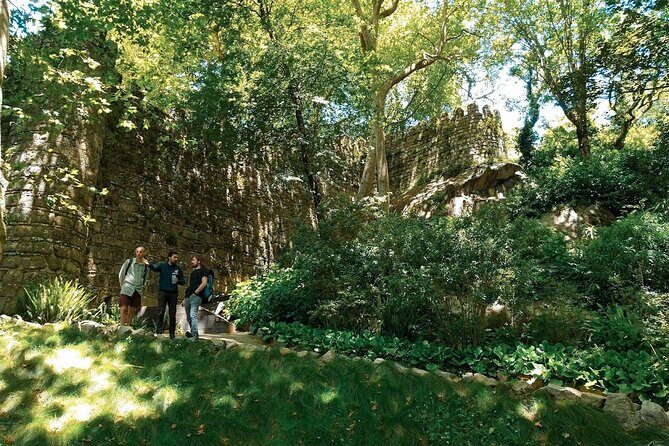
You start with Castelo dos Mouros, at the gates of the Moorish castle area. This isn’t just a viewpoint stop. Diogo brings you to a ruined medieval village setting where an archaeological excavation connects directly to what you’re looking at now.
The standout here is that you’re seeing an open-air museum built around structures and discoveries. The information isn’t abstract. The site includes older building remains and graves visible in the landscape, with a small museum space featuring artifacts found there. That combination—ruins outside plus objects explained inside—helps you connect everyday life to the “big picture” of Sintra’s layered past.
The tour time at this stop is about 45 minutes, with admission listed as free. For many visitors, 45 minutes sounds short. But here’s the practical upside: the guide’s job is to point you toward what to notice, and to translate what those layers mean. Instead of wandering, you get a guided “what this is, why it matters, what it suggests” workflow.
Potential consideration: this area can involve uneven ground and ruins. Even if you’re not doing a long hike, you’ll want shoes with grip and a willingness to look up and down. If you’re expecting a flat promenade, you might find it a bit more rugged.
Santuario da Peninha: Chapel Legends and Hilltop Views with Few Distractions
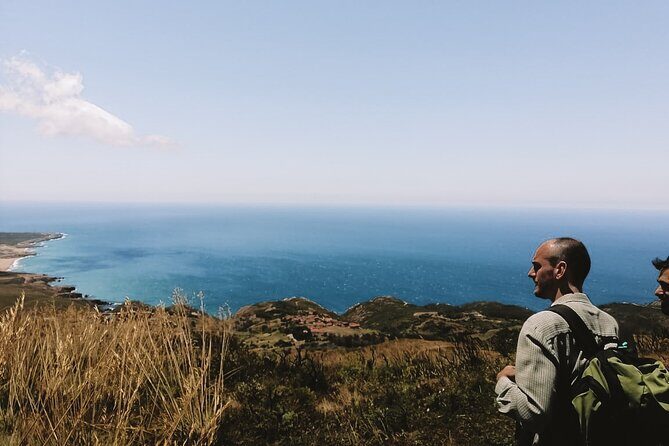
Next you head into the Sintra forest toward Santuario da Peninha, on a hilltop where an old chapel sits above the trees. This spot is famous locally as a pilgrimage area, tied to a miracle story. You’ll also see another ruined building with foundations described as resting on Portugal’s foundation itself.
What makes this stop work for travelers is the balance between atmosphere and explanation. You’re not just taking photos of a hilltop ruin. You’re learning why people came here in the first place—what made the place sacred, and how those stories shape what survives.
You’ll spend around 30 minutes, and admission is listed as free. The group timing is tight enough that you should arrive ready to listen. If you’re a slow reader of plaques, use the guide’s speech as your “first draft” and then you can come back later for solo time.
Diogo also frames it as a place away from the heavy crowds, and it delivers one of the best views across the Lisbon bay area. In plain terms: you get the feeling of being on a mountaintop without the stress of fighting for position. Even if you’ve been in Sintra for a couple of days already, this stop often feels like a reset—different air, different angle, and a calmer pace.
Practical note: you’re still on a hill, so expect wind and variable footing. Bring a layer you don’t mind using.
Penedo de Adrenunes: Stonehenge Vibes and a 5,000-Year Belief
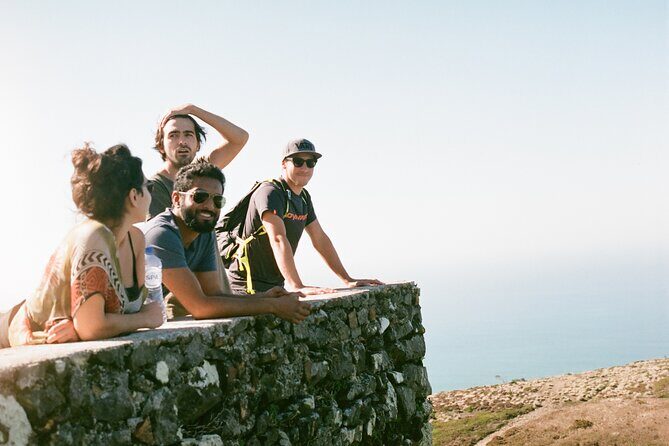
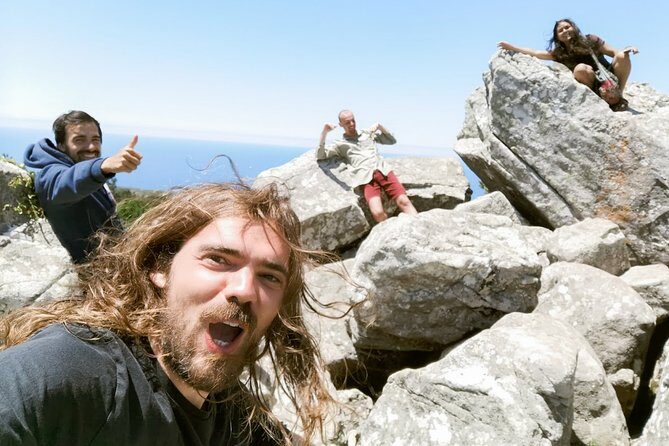
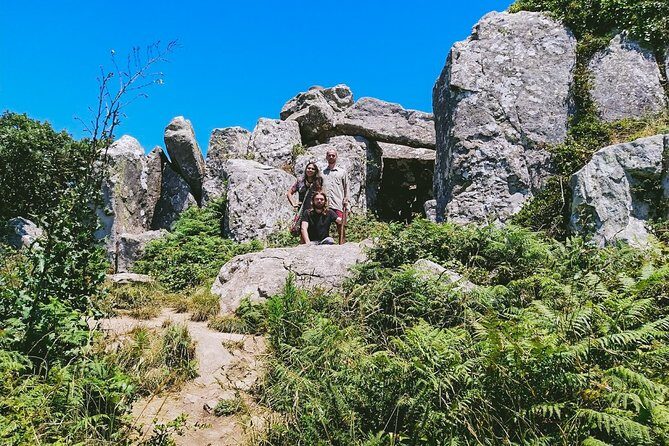
The last major stop is Penedo de Adrenunes, which is described as giving Stonehenge vibes. That’s an easy way to understand the visual impression: it’s a curious, prehistoric-feeling site where the form grabs your attention immediately.
Here’s the important nuance: archaeological artifacts have not been found there. Still, it’s believed the site was used by ancestors around 5,000 years ago. That combination—what we can prove versus what we think might be true—is exactly the kind of tension an archaeologist enjoys discussing. It turns the stop into a lesson about how evidence works, not just a lesson about dates.
You’ll make a short walk (about 15 minutes) down into the Sintra Forest, then visit the hilltop facing toward the westernmost point of continental Europe. The time spent at this stop is about 45 minutes, and admission is listed as free.
This is the stop where I’d recommend you switch into “watch mode.” Look at how the site sits in relation to sightlines, wind, and the slope. Even without a big museum, the setting helps you understand why people may have gathered here.
Possible consideration: because it involves walking, it’s the stop most likely to feel challenging if you have mobility limits or if you’re traveling with very small kids. You don’t need to be a hiker, but you do need to be comfortable with uneven forest paths and a short descent and return.
How Diogo’s Archaeology Changes Your Day (Not Just Your Photos)
This is where the private guide format pays off. A typical Sintra day can feel like a checklist: castles, palaces, viewpoints—then back to Lisbon. Here, Diogo keeps bringing you back to “how do we know?” and “what does this ruin tell us?”
Because Diogo is an archaeologist (and has personal excavation experience connected to the Castelo dos Mouros site), the explanations feel grounded. At Castelo dos Mouros, he doesn’t just say the site is old. He shows you the logic behind what remains and how those discoveries become an open-air presentation.
The best part is how he adapts. In the real-world examples connected to this tour, he tailored the topics for families, including children around 11 and 13. That tells me the guide knows how to explain without talking down. If you’re traveling with mixed interests—one person wants history, another wants views—that matters. Diogo can keep the archaeology thread while still giving you the moments you’ll remember.
Also, the day is described as English-friendly, and Diogo is said to speak excellent English. That’s practical in Portugal: you’ll get smoother explanations, and you won’t constantly ask for repetition.
One more thing I appreciate: flexibility. In at least one case, if sites are closed for maintenance, the guide can revise the plan. Examples of swaps mentioned include stops tied to local religious and classical heritage (like a Roman temple, a cathedral with an old working organ, and a chapel of bones), plus a cork-related stop and a local meal recommendation. That kind of contingency makes the tour feel sturdier when the unexpected happens.
Other private tours in Sintra




The Value Question: $113.84 for 3 to 4 Hours, and What You Actually Get
Let’s talk money in a grounded way. The price is listed at $113.84 per person, for about 3 to 4 hours. For a private tour in Sintra, this is not “cheap,” but it can be fair value when you look at what’s bundled.
Here’s what you’re paying for that you can’t easily DIY:
- A private guide who can interpret ruins and keep you from guessing
- Transport between sites in a classic car or electric Jeep
- Snacks included, so you’re not rushing to buy something last-minute
- Free admission at the main stops listed (Castelo dos Mouros open-air museum area, Peninha sanctuary area, and Penedo de Adrenunes)
The free entry part matters because Sintra attractions can add up quickly. If you do only the famous palaces, you’re often spending money on access and then not getting much contextual interpretation. Here, the value is interpretation plus convenience.
Is it worth it if you’re the kind of traveler who enjoys reading on your own and doesn’t like guided explanations? Maybe not. If you want quiet walking without commentary, you may prefer self-guided routes and an audio guide.
But if you like history and want it explained in a way that connects the ruins to real human stories, this tour is designed to deliver that payoff quickly.
Timing, Transfers, and What to Bring for This Forest-Hill Day
This day has the rhythm of short stops plus travel time. You’ll likely spend around 45 minutes at Castelo dos Mouros, 30 minutes at Peninha, and 45 minutes at Penedo de Adrenunes, with extra time for pickup and moving between areas.
Because you’re in forest terrain and hilltop areas, I’d plan on:
- Comfortable shoes with grip for uneven ground
- A light layer (Sintra can be cooler than Lisbon even in warm months)
- A small snack-style mindset, since snacks are included but the day is still active
Transfers by car or electric Jeep mean you’re not spending the whole day fighting public transport schedules or hiking between far points. That’s a big deal in Sintra, where roads and hills can drain energy fast.
If you’re traveling with kids, bring the mindset of “short concentration bursts.” The stops are not too long, and Diogo can tailor explanations to keep things interesting. In one family case, the guide even adjusted the day to fit children’s interests, which is a useful indicator that the tour can handle different attention spans.
Who This Tour Fits Best (and Who Might Prefer Something Else)
This tour fits best if you:
- Want Sintra to feel more human and less like postcards
- Like ruins and archaeology, but also want a guide to connect the dots
- Prefer a private experience where questions actually get answered
- Enjoy calmer hilltop viewpoints away from the busiest areas
You might want to choose something else if you:
- Want a full-day palace marathon
- Need lots of time for slow museum reading
- Are unable or unwilling to do the short forest walk involved with Penedo de Adrenunes
The private format makes it flexible, but it’s still three main sites. Think of it as a focused archaeology day, not a broad Sintra greatest-hits tour.
Should You Book This Sintra Archaeology Tour?
If you like history you can see, book it. The mix of archaeology interpretation, free-entry stops, and easy transfers makes it a strong choice for visitors who feel overwhelmed by Sintra’s usual tourist overload.
I’d especially recommend it if:
- You want off-the-beaten-path feeling moments with views
- You care about why ruins matter, not just that they exist
- You’re traveling with people who have different interests and you want a guide who can adapt
If your main goal is famous palaces and you’re not interested in how archaeologists read the ground, then you may find this tour too focused. But for most curious travelers, this is one of the smartest ways to understand Sintra beyond the obvious.
FAQ
How long is the Sintra archaeology private tour?
It runs about 3 to 4 hours, with the main stops scheduled for around 45 minutes, 30 minutes, and 45 minutes respectively.
Is this a private tour, and is it offered in English?
Yes. It’s private, meaning only your group participates, and it’s offered in English.
What’s included besides the guide?
The tour includes snacks and transfers by classic car or electric Jeep.
Are tickets required for the main stops?
The information provided lists admission tickets as free for the main stops: Castelo dos Mouros, Santuario da Peninha, and Penedo de Adrenunes.
Where do you meet, and where does the tour end?
You meet at Queijadas da SapaVolta do Duche 12, 2710-631 Sintra, Portugal, and the tour ends back at the meeting point.
What is the cancellation policy?
Free cancellation is available up to 24 hours in advance of the experience for a full refund.