REVIEW · SINTRA
3 Tours Private / Tour SINTRA Second Day Tour FÁTIMA Third day Tour LISBON
Book on Viator →Operated by Fantastic Ride · Bookable on Viator
Three days, three Portuguese moods. This private route strings together Sintra palaces, Fátima sanctuaries, and Lisbon viewpoints, all driven by a pro who adjusts the pace to your group. I especially like the air-conditioned ride with Wi‑Fi and water and the way the plan can flex by your preferences. The one catch: tickets for many highlights are not included, so you’ll want to budget time and money for admissions.
The tour starts in Lisbon at 09:00 and ends back at your accommodation. That means you spend less time figuring out trains, lines, and connections—and more time walking, looking, and taking photos at the right moments.
If you like structure but not a rigid factory schedule, this is a strong match. If your group hates walking (Sintra and the viewpoints are hilly), you’ll need comfortable shoes and a clear plan with your driver for breaks.
In This Review
- Key highlights you’ll feel fast
- A 09:00 start that keeps all three days from feeling rushed
- Day 1 in Sintra: Moorish Castle to Pena, then palaces and gardens
- Moorish Castle: a fortress with a cistern and royal tower
- Park and National Palace of Pena: Romanticism on a mountaintop
- Centro Histórico de Sintra and Sintra National Palace: the royal power center
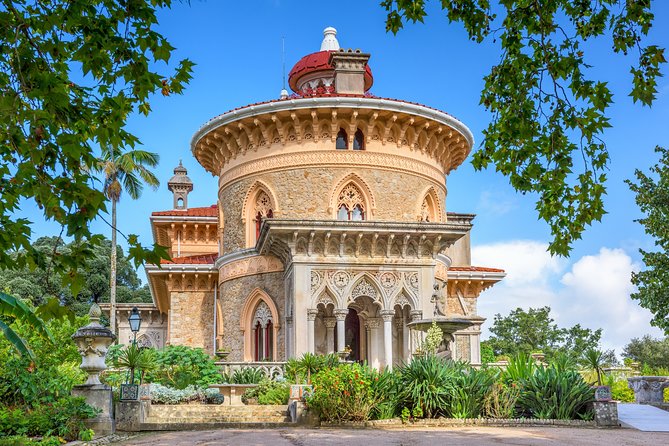
- Quinta da Regaleira and Monserrate: dream logic meets design
- Day 2 Fátima: pilgrim routes, basilicas, and the quiet power of place
- Valinhos Sanctuary: Via-Sacra route and the Calvary
- Basilica of the Holy Trinity: modern, round, and built for crowds
- Capela das Aparições and Basilica of Our Lady of the Rosary: the heart of the sanctuary
- Day 3 Lisbon: Jerónimos and Belém to viewpoints that make Lisbon feel real
- Mosteiro dos Jerónimos: Manueline architecture tied to the Discoveries
- Torre de Belém: a fortress that looks delicate
- Pastéis de Belém: the story behind the pastry
- Padrão dos Descobrimentos and Eduardo VII Park: monuments with context
- Rossio Square and Lisbon Cathedral: the quake era and the reconquest era
- Miradouro Santa Luzia and Miradouro Senhora do Monte: two ways to see the city
- Guides matter: what the guide reviews tell you to expect
- Value check: is $581.78 per person a good deal?
- Who this tour fits best
- Should you book this 3-day Sintra–Fátima–Lisbon private tour?
- FAQ
- What is the duration of the tour?
- Where does the tour start and where does it end?
- Is pickup included?
- Is this a private tour?
- What’s included in the price?
- Are attraction tickets included?
- Are meals included?
- Does the vehicle have Wi‑Fi?
- Is there a restroom on the vehicle?
- What is the cancellation policy?
- Is the tour offered in a mobile-ticket format?
Key highlights you’ll feel fast
- Hotel-area pickup and drop-off in Lisbon keep the logistics simple.
- Private vehicle with Wi‑Fi, air conditioning, and mineral water makes long days easier.
- Flexible timing means you can slow down where it matters most to your group.
- Sintra’s UNESCO mix of fort, palace, and dreamlike gardens covers a lot in smart order.
- Fátima’s main sanctuaries offer a calm, meaningful day with free access at key spots.
- Lisbon’s big Manueline and riverside landmarks pair architecture with classic viewpoints.
A 09:00 start that keeps all three days from feeling rushed
This tour is built around a simple rhythm: you leave Lisbon in the morning, spend the day in one region, then return to Lisbon for the night. You’re not bouncing through multiple neighborhoods on public transport while carrying bags and fighting schedules.
I like that the timing is not set in stone. The driver can flex how long you spend in each location based on your pace, as long as you keep to the day’s overall plan. That’s a real quality-of-life feature in Portugal, where a “quick stop” can turn into a long, satisfying wander once you’re there.
You’ll also appreciate the basic comfort setup: air-conditioned vehicle, Wi‑Fi on board, and bottled/mineral water. The lack of a restroom on board is worth noting, so plan bathroom breaks during stops rather than assuming there will be one in transit.
If you're still narrowing it down, here are other tours in Sintra we've reviewed.
Day 1 in Sintra: Moorish Castle to Pena, then palaces and gardens
Sintra can feel like a greatest-hits album—so much famous stuff packed into hills. This day tackles it in an order that keeps you moving through the main “clusters” instead of doubling back constantly.
Moorish Castle: a fortress with a cistern and royal tower
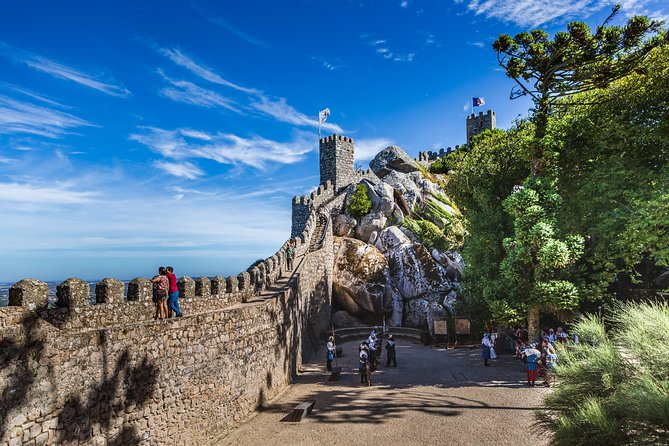
You start with Moorish Castle, built in the early days of Moorish occupation of the peninsula (the 8th century). After it was taken by Dom Afonso Henriques in 1147, a Christian chapel followed—dedicated to St. Peter of Penaferrim.
One detail I’d file under “this is why it’s worth it”: the castle’s restoration work in 1860 under Dom Fernando II (husband of Dona Maria II) added a new dignity to the medieval ruins. Inside you’ll find a Moorish cistern, plus the Royal Tower. It’s not just walls and views; it’s a layered story you can actually see.
Park and National Palace of Pena: Romanticism on a mountaintop
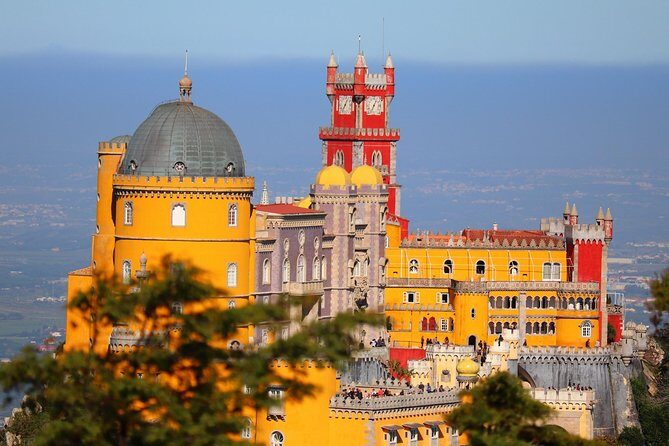
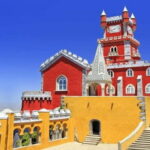
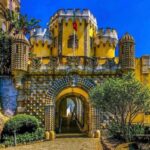
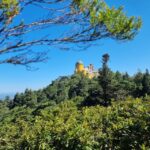
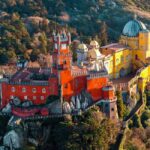
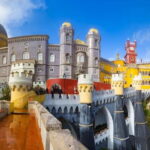
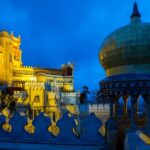
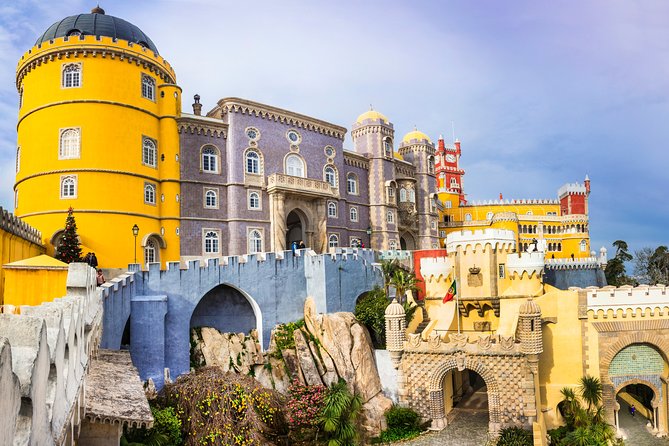
Next is Pena Palace, set on Monte da Pena. This palace reflects 19th-century Romanticism in Portugal, built on the site of a former monastery. It was created by D. Fernando de Saxe Coburg-Gotha, who married Queen Dona Maria II in 1836—then decided he wanted a summer palace after falling for Sintra.
The palace also has a built-in “how did they think of that” feature: there’s a restaurant in one wing, with a terrace that looks over both the Sintra Mountains and the coast. That makes it easier to turn the visit into a slow, relaxed experience rather than a sprint.
Important note for planning: Pena’s admission is not included, so you’ll pay separately.
Centro Histórico de Sintra and Sintra National Palace: the royal power center
A short stop at Centro Histórico de Sintra follows. This is free and it’s the right break from palace interiors—because you get streets, atmosphere, and buildings from different eras.
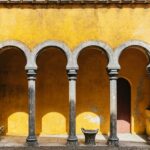
Then you head to Sintra National Palace. Among Portugal’s royal medieval palaces, it’s one of the most distinctive. What makes it especially interesting is that the version you see today was shaped by Dom João I and later Dom Manuel I, who enriched the decoration and added a new wing. This is where you start to connect the dots between political power, changing tastes, and the visual language of Portuguese monarchy.
The interior visit is not included for admission, so remember to budget for it.
Quinta da Regaleira and Monserrate: dream logic meets design
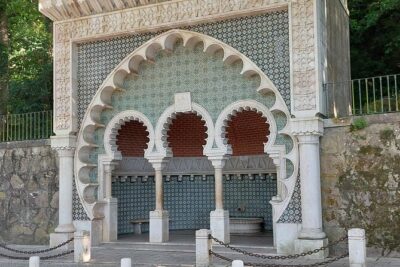
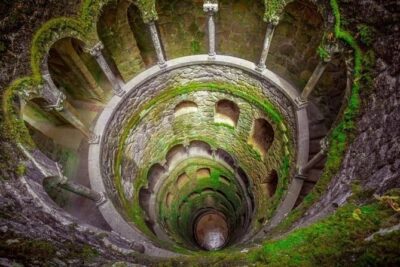
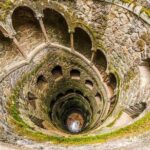
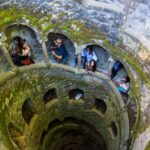
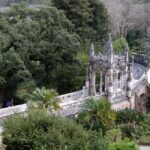
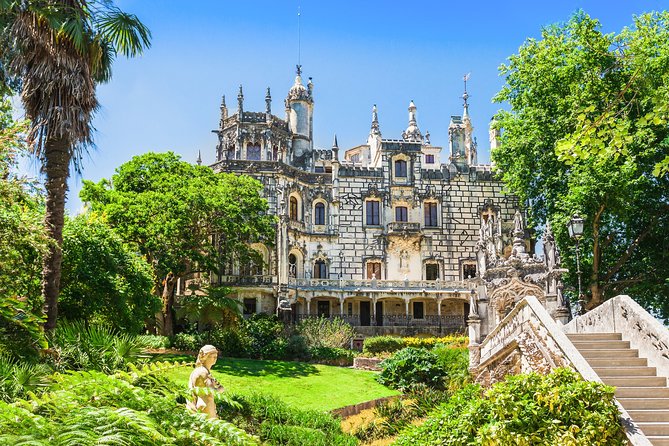
Quinta da Regaleira is close to the historic center and has a reputation for being enigmatic for a reason. It was built in the early 20th century by millionaire António Augusto Carvalho Monteiro, with scenographic architect Luigi Manini. The palace blends Gothic, Manueline, and Renaissance forms with mythical and esoteric symbolism.
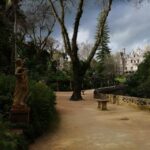
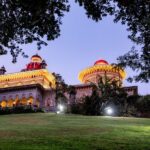
Then there’s Park and Palace of Monserrate, a Romantic park linked to William Beckford, who fell in love with the Sintra mountains. This pair of stops is where Sintra shifts from “official landmark” to “you can feel the imagination.”
Quinta da Regaleira is not included for admission, and Monserrate admission may be separate too—so check what you’ll want inside before you arrive.
The Sintra reality check (so you don’t get annoyed later)
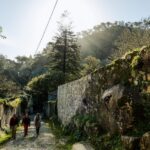
Sintra is hilly and involves stairs and uneven paths. Even with a driver who can flex time, you’ll still be doing real walking. If anyone in your group has limited mobility, this tour is best when you speak up early so the driver can adjust the route and pacing. One group experience highlighted how guide Margarida adjusted the day for guests with walking issues, which is exactly what you want to hear.
Day 2 Fátima: pilgrim routes, basilicas, and the quiet power of place
Day 2 keeps things focused on Fátima’s sanctuary area. It’s not a day of “one attraction after another” in the theme-park sense. It’s more about understanding the pilgrimage landscape and visiting key sites tied to it.
Valinhos Sanctuary: Via-Sacra route and the Calvary
You begin at Valinhos Sanctuary, visited by thousands who follow a route of the Via-Sacra to the Hungarian Calvary. There’s also the Chapel of St. Stephen of Hungary, plus visits connected with the houses in Aljustrel: the House of Lucy and the House of Francis and Jacinta Marto.
This area also includes the Angel of Portugal and the Via-Sacra stations, created with writing credited to Maria Amélia Carvalheira da Silva. Even if you’re not deeply religious, the art and symbolism make the place feel intentional, not random.
This stop is free, which is a nice balance after a ticketed Sintra day.
Basilica of the Holy Trinity: modern, round, and built for crowds
Next comes the Basilica of the Holy Trinity, a modern counterpart to the older sanctuary spaces. It was planned since 1973 and inaugurated in 2007 due to the need for more capacity.
The building is described as a modern, round, white structure with a diameter of 125 meters, and it’s designed with no intermediate support. The finish is covered in a local stone called white of the sea.
Admission is free. So you can experience the scale without extra cost.
Capela das Aparições and Basilica of Our Lady of the Rosary: the heart of the sanctuary
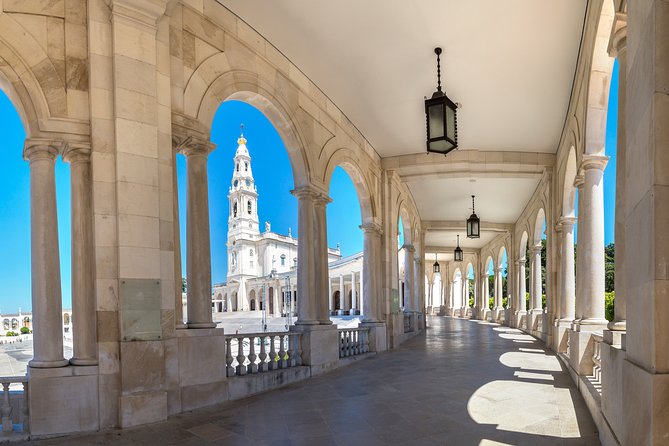
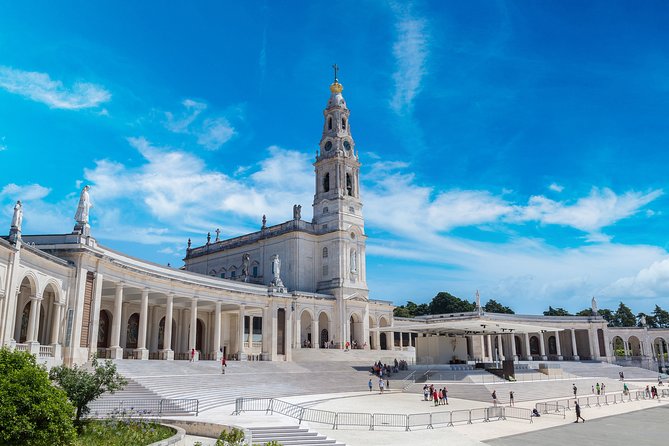
The day’s emotional center is Capela das Aparições. It was built in 1919 by local people in response to Our Lady’s request during one of the apparitions, with the first mass in 1921.
The chapel keeps a modest feel similar to a simple hermitage, and the spot is marked by the image of Our Lady at the place of the former holm-oak tree. The original tree disappeared over time as believers took pieces of it.
Then you visit the Basilica of Our Lady of the Rosary (often called the Basilica of the Rosary), integrated within the sanctuary at Cova da Iria. Like the other sanctuary stops, the admission listed here is free, which helps you keep the day meaningful without turning it into a constant add-on expense.
Fátima tip that matters: manage quiet time
Fátima is a place where people slow down. You’ll likely feel that during the basilica visits and chapel time. Keep your own expectations calm too—your driver can help with timing, but the atmosphere is what you’re really there for.
Day 3 Lisbon: Jerónimos and Belém to viewpoints that make Lisbon feel real
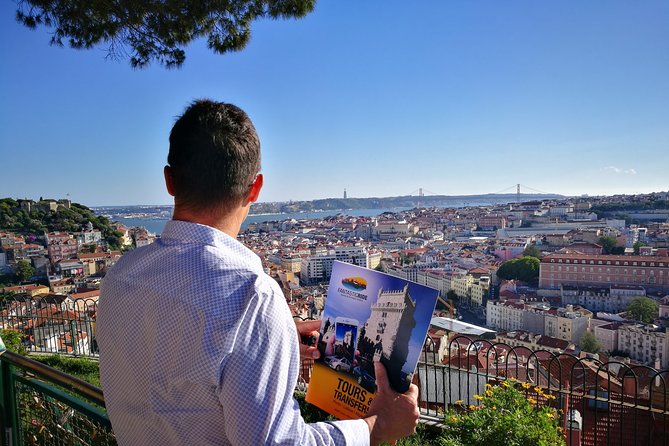
Lisbon on the last day mixes major monuments with classic city viewpoints. It’s a smart combination because it gives you both the official postcard sights and the “I can see the whole city” moments.
Mosteiro dos Jerónimos: Manueline architecture tied to the Discoveries
You start at Mosteiro dos Jerónimos, famous for Manueline architecture on the Tagus. The site began with a small hermitage dedicated to Santa Maria built by Infante D. Henrique in 1452.
In the early 16th century, King Manuel I intended a large monastery. The plan was approved by the Holy See and given to the Order of the Friars of St. Jerome. This is one of Portugal’s most important monastic ensembles and a major church.
Admission is not included, so plan on paying separately.
Torre de Belém: a fortress that looks delicate
Next is Torre de Belém. It’s ordered by King Manuel I, built by Francisco de Arruda between 1514 and 1521. The tower is known for its harmony and delicate ornamentation, but it was also a formidable defensive bastion.
Here’s a fun detail you can actually picture: it was built on a basalt island off the right bank in front of Restelo beach, but the river’s course changed over time, so it now sits practically merged with the shore. UNESCO protection came in 1983.
Admission is not included.
Pastéis de Belém: the story behind the pastry
You then stop near the source of Pastéis de Belém. The background is very tied to Portuguese history: in the early 19th century, a sugar cane refinery and general store operated next to the monastery area. After the liberal revolution of 1820 and the closure of monasteries in 1834, people were pushed out.
The pastries survived because someone started offering sweet treats for sale. The name Pastéis de Belém stuck.
The stop time is short (30 minutes) and it’s listed as free here, so use it as a quick break and snack moment rather than a full meal replacement.
Padrão dos Descobrimentos and Eduardo VII Park: monuments with context
The Padrão dos Descobrimentos sits by the riverside. It was designed in 1940 for the Exposition of the Portuguese World, but it wasn’t built until 1960, tied to 500 years since Prince Henry the Navigator’s death. It’s a concrete reminder of how Portugal packaged the era of exploration into public memory.
Admission is not included.
Then you head to Parque Eduardo VII, a park north of Avenida da Liberdade. It was originally named Parque da Liberdade, and renamed after British King Edward VII in 1903. The value is in the views over Lisbon.
Rossio Square and Lisbon Cathedral: the quake era and the reconquest era
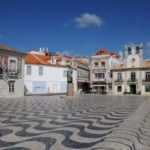
You’ll pass Rossio Square, a classic downtown space rebuilt after the 1755 earthquake. It’s dominated by the neo-classical D. Maria II Theatre, built on the former House of the Inquisition site.
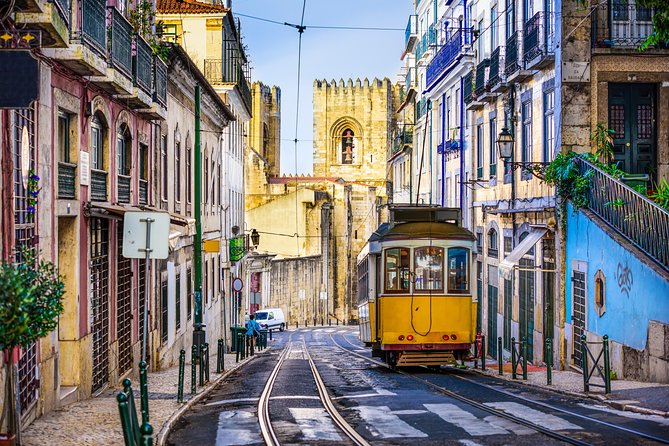
Next is Lisbon Cathedral (Sé Catedral de Lisboa), with construction beginning in 1147 after D. Afonso Henriques reconquered the city from the Moors. It was built over a Muslim mosque, which archaeology confirms sat on an earlier Visigothic Christian temple.
Admission is not included.
Miradouro Santa Luzia and Miradouro Senhora do Monte: two ways to see the city
Finally, you’ll end with viewpoints.
Mirador de Santa Luzia gives a wide view over Alfama and the Tagus. It’s framed by notable points: the dome of Santa Engrácia, churches of Santo Estêvão, and towers of São Miguel. The south wall has modern tile panels, adding a visual layer to what you see.
Then Miradouro da Senhora do Monte in São Vicente (Graça) offers another sweep: south toward the Tagus and Castle of São Jorge, west toward Bairro Alto and Monsanto forest area, and north toward Avenida Almirante Reis. There’s also the small chapel of Our Lady of the Mount, founded in 1147 and consecrated to St. Gens, plus the tradition that D. Afonso Henriques placed his camp here before conquering Lisbon.
This is where the tour turns from sightseeing into perspective.
Guides matter: what the guide reviews tell you to expect
This tour company runs with professional local guides, and the feedback on them is practical. One guide, Filipe, was praised for being very professional, strong on Portuguese history, and proud of the city—exactly what you want when you’re moving through Lisbon’s layers so fast.
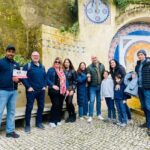
Another guide, Margarida, stood out for service with a group of six ladies and adapting the day for guests with walking challenges. That matters because the route includes uphill sites in Sintra and viewpoint steps in Lisbon.
So my advice: tell your guide what your group can handle before you start. Share walking limits and preferred pacing. The itinerary allows for flexibility, and using it will make the tour feel custom rather than scripted.
Value check: is $581.78 per person a good deal?
Price is always personal, but I can help you judge it.
At $581.78 per person for an approx 3-day private program, you’re paying for three things you’d otherwise have to piece together yourself:
- Private transportation with comfort (air conditioning, Wi‑Fi, bottled/mineral water).
- A driver who manages timing across Sintra, Fátima, and Lisbon.
- A set of major sites that includes multiple free sanctuary stops in Fátima.
The part that can change the final cost: tickets are not included. Many of the biggest indoor or ticketed stops listed for admission not included include Pena Palace, Sintra National Palace, Quinta da Regaleira, Jerónimos, Torre de Belém, and more. If you’re traveling in a group that’s ready to pay admissions, you’ll feel good about the overall value. If you’re trying to minimize spending, do a quick estimate of which paid entries you actually want.
Also, since this is a private tour, it’s likely to make more sense if you’re traveling as a small group and you want flexibility and comfort—not just “get me from A to B.”
Who this tour fits best
This experience is a smart match if:
- you want major highlights without planning each leg of the route
- you care about comfort during travel (Wi‑Fi, air conditioning, water)
- you like the idea of Sintra + Fátima + Lisbon as one coherent story arc
- your group benefits from pacing that a driver can adjust
It may be less ideal if your group hates hills and steps with no flexibility. Sintra and Lisbon viewpoints require real walking, even when the vehicle helps you get close.
Should you book this 3-day Sintra–Fátima–Lisbon private tour?
If your priority is simple logistics and a guided path through three iconic regions, I’d book it. The private vehicle, hotel-area pickup/drop-off in Lisbon, and flexible timing make it a lot more relaxed than trying to stitch together trains and separate guides.
Before you commit, do one homework task: list the ticketed sights you want most (Pena, Jerónimos, Torre de Belém, and so on) and budget accordingly. If you’re comfortable adding admissions and you’re ready for walking days, this is a strong way to see Portugal in one flowing trip.
FAQ
What is the duration of the tour?
The program runs for about 3 days.
Where does the tour start and where does it end?
The tours start in Lisbon at 09:00 and end back in Lisbon at your accommodation.
Is pickup included?
Pickup is offered, and the tour ends at your accommodation in Lisbon.
Is this a private tour?
Yes. It’s private, and only your group participates.
What’s included in the price?
Included items listed are bottled water, an air-conditioned vehicle, private transportation, and Wi‑Fi on board.
Are attraction tickets included?
No. Tickets are not included.
Are meals included?
No. Food and drinks are not included.
Does the vehicle have Wi‑Fi?
Yes. Wi‑Fi is provided on board.
Is there a restroom on the vehicle?
Restroom on board is not included.
What is the cancellation policy?
Free cancellation is available if you cancel up to 24 hours in advance of the experience start time.
Is the tour offered in a mobile-ticket format?
Yes. Mobile ticket is listed as a feature.